
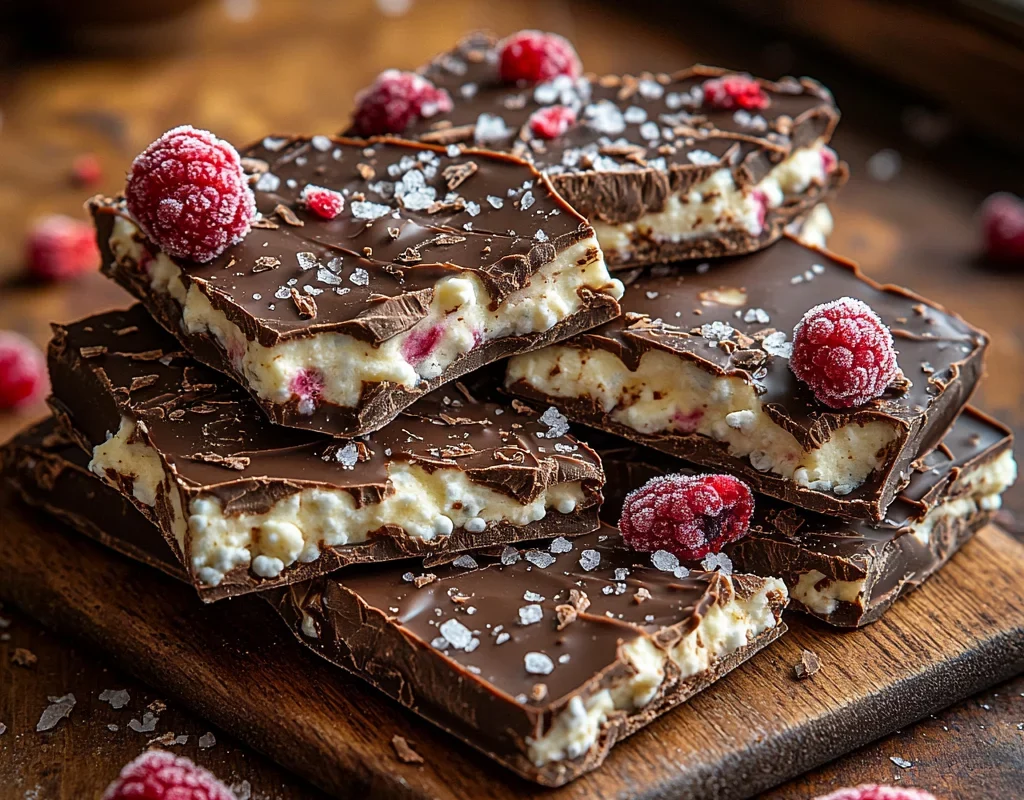
The moment I first tasted frozen cottage cheese chocolate bark, I knew I’d stumbled onto something magical. It was one of those happy accidents—I’d mixed leftover cottage cheese with melted chocolate for a quick snack, popped it in the freezer, and forgotten about it until that satisfying snap when I broke off a piece. Now it’s my go-to when I need a high-protein treat that feels indulgent but won’t wreck my healthy eating goals.
You’re going to love how this 5-ingredient wonder comes together with zero baking required. I’ll walk you through my foolproof method for creating that perfect crisp texture, plus all my favorite mix-in combinations (think crushed almonds, dried cherries, or even a sprinkle of sea salt). What surprises most people is how the cottage cheese disappears into the chocolate, leaving just a creamy richness without any curdy texture.
Here’s what you’ll learn:
- Why cottage cheese is the secret weapon for high-protein desserts
- How to prevent chocolate from seizing when mixing in cold ingredients
- The exact freezing time for that ideal bark snap
- Storage tricks to keep your batch fresh for weeks
What Is Frozen Cottage Cheese Chocolate Bark?
That 5-ingredient wonder I mentioned? It all starts with blended cottage cheese, which transforms into the creamiest base for this frozen treat. If you enjoyed this, you might also like Cottage Cheese Egg Bake. I first discovered this hack when I wanted a high-protein dessert that didn’t taste like “health food.” Unlike traditional chocolate bark (which is just melted chocolate with toppings), this version whips cottage cheese into the mix, creating a lighter texture that’s somewhere between fudge and frozen yogurt bark.
What surprised me most was how the cottage cheese completely disappears when blended – no curds, just smooth richness. I’ve served it to cottage cheese skeptics who had no idea it was in there! The magic happens when you fold in melted chocolate, freeze it thin, then crack it into shards. It’s become my secret weapon for satisfying sweet cravings without the sugar crash.
Why It’s Healthier Than Regular Chocolate Bark
I reach for this instead of regular bark because one square packs 15g of protein from the cottage cheese. Where traditional versions use heavy cream or butter, mine gets its creaminess from blended low-fat cottage cheese. Plus, you control the sweetness – I often use dark chocolate and skip added sugar. It’s naturally nut-free too, making it perfect for school snacks or allergies. The best part? You’re getting calcium and probiotics while eating what tastes like straight-up chocolate magic.
Essential Ingredients for Perfect Cottage Cheese Bark
Since we’re talking about that magical protein-packed texture, let’s break down exactly what you’ll need to recreate it at home. If you enjoyed this, you might also like Cottage Cheese Lasagna. The base is simpler than you’d think: just cottage cheese, chocolate, and a touch of sweetener if you like. I swear by Good Culture or Friendship brands because they blend into the smoothest consistency—no gritty curds left behind. For chocolate, I alternate between dark chips (70% works great) and semi-sweet depending on my mood.

The fun comes with mix-ins: freeze-dried strawberries give a tart crunch, while a sprinkle of flaky salt makes it downright addictive. And don’t worry—this recipe is naturally nut-free, but if you want crunch without nuts, toasted coconut or puffed quinoa are my go-tos.
Nut-Free and Dairy-Free Alternatives
When my friend with a dairy allergy begged to try this, I swapped the cottage cheese for silken tofu (blend it extra smooth) and used dairy-free chocolate chips. It worked shockingly well—still creamy with that satisfying snap. For a nut-free protein boost, I’ll sometimes stir in sunflower seed butter instead of peanut butter. Just remember: if you’re using liquid sweeteners like maple syrup, reduce other liquids slightly so your bark doesn’t get icy.
Best Cottage Cheese Brands for Smooth Texture
Through trial and error, I’ve found full-fat or 2% cottage cheese makes the creamiest bark. Avoid “no salt added” varieties—they taste flat. Good Culture’s small-curd version disappears completely when blended, while Daisy works in a pinch if you strain off excess liquid first. Pro tip: let your cottage cheese sit at room temp for 10 minutes before blending—it incorporates smoother when it’s not fridge-cold.
Step-by-Step Preparation Guide
Since we’ve covered the best cottage cheese brands for a smooth base, let’s get into the nitty-gritty of making this healthy protein-packed treat. If you enjoyed this, you might also like Cottage Cheese Stuffed Chicken Breast. I’ve made this bark dozens of times, and the texture makes or breaks it—too icy and it’s disappointing, but when done right, it’s like a cross between fudge and ice cream.

How to Achieve the Perfect Texture
First, blend your cottage cheese until it’s completely smooth—I let my food processor run for a full minute, scraping down the sides twice. Any tiny curds left will freeze into unpleasant lumps. For the creamiest results, I add a splash of vanilla extract or a tablespoon of nut-free sunflower seed butter while blending. When spreading the mixture onto parchment paper, keep it about ¼-inch thick—too thin and it’ll crack, too thick and it won’t freeze evenly.
Freezing Time and Temperature Guidelines
I always freeze my bark uncovered at -18°C (0°F) for at least 4 hours, but overnight is ideal. If your freezer tends to form ice crystals, place a baking sheet on top of the pan to shield it. To test if it’s ready, the chocolate drizzle should snap when tapped. Pro tip: Let it sit at room temp for 3 minutes before breaking into pieces—this prevents it from shattering.
Nutrition Facts and Health Benefits
That perfect creamy-yet-snappy texture we just nailed isn’t just satisfying—it packs a serious nutritional punch. Each serving of my frozen cottage cheese chocolate bark delivers about 12g of high-quality protein, nearly double what you’d get from a store-bought protein bar. I love that it keeps me full for hours without the sugar crash, thanks to the slow-digesting casein in cottage cheese. Plus, the calcium content rivals a glass of milk, and the dark chocolate adds antioxidants.
Customizing for Different Dietary Needs
I’ve made this bark work for almost every diet—it’s naturally nut-free (thanks to sunflower seed butter) and gluten-free. For keto friends, I swap honey with powdered erythritol and use 90% dark chocolate. Vegan? Blend silken tofu instead of cottage cheese—it won’t be as creamy, but still hits the spot. My lactose-intolerant sister tolerates it well because cottage cheese is lower in lactose than milk. Just watch portion sizes if you’re counting carbs—the chocolate adds up!
Protein Power and Recovery Benefits
After my evening workouts, this bark is my go-to recovery snack. The 24g of protein per batch (from cottage cheese and chocolate) helps repair muscles better than carb-heavy alternatives like granola bars. I’ve noticed less next-day soreness since making this a post-workout staple. The potassium in cottage cheese also beats bananas for cramp prevention—a trick my yoga instructor swears by. It’s basically dessert that does double duty!
Creative Flavor Variations to Try
Since we’ve covered how adaptable this bark is for different diets and fitness goals, let’s have some fun with flavors! I love playing with mix-ins because cottage cheese is like a blank canvas—it pairs well with sweet or savory toppings. Over the years, I’ve tested dozens of combos, and these are the ones my family keeps requesting. The best part? You can make it healthy while satisfying any craving, from fruity to festive. For more information, see King Arthur Desserts.
Kid-Friendly Versions
When my niece declared cottage cheese “weird,” I won her over with a strawberry-vanilla version. I blend frozen strawberries into the cottage cheese base and sprinkle mini chocolate chips on top—it tastes like a creamy popsicle! For picky eaters, try crushed graham crackers or rainbow sprinkles. Another hit: swirl in a tablespoon of peanut-free sunflower seed butter for extra protein and let the kids press in banana slices like edible mosaics. For more information, see Serious Eats Desserts.
Seasonal & Savory Twists
Last Christmas, I made a peppermint bark version with crushed candy canes that disappeared in hours. Pumpkin spice fans can mix in pureed pumpkin and cinnamon for fall. But don’t overlook savory options—my husband adores a version with everything bagel seasoning and dark chocolate. It sounds wild, but the salty-sweet combo is addictive! Just remember: the more add-ins, the softer your bark will be, so freeze it longer. For more information, see Sally’s Baking Addiction.
Storage and Freezing Tips
After experimenting with all those fun flavor twists—from peppermint bark to savory everything bagel—I’ve learned a few tricks to keep this healthy protein-packed treat fresh. Since cottage cheese has higher moisture content than regular chocolate bark, proper storage makes all the difference between a satisfying snack and a frosty disappointment.
Preventing Freezer Burn
I always use airtight glass containers or thick freezer bags with all the air pressed out. That thin layer of ice crystals? That’s what happens when I get lazy and use flimsy wrap. For extra protection, I’ll sometimes press parchment paper directly onto the bark’s surface before sealing. In my freezer, it stays perfect for up to 2 months, though my family usually devours it within weeks. If you spot any frost, just scrape it off—the bark underneath still tastes great.
Thawing for Best Texture
Unlike traditional bark, this version stays slightly creamy when thawed. I pull out just what I need and let it sit at room temp for 5-7 minutes—any longer, and it gets too soft. For a firmer bite, I’ll eat it straight from the freezer (my go-to for that ice cream-like texture). Pro tip: If you’re packing it in lunches, tuck a small ice pack next to it to prevent melting.
Common Mistakes and How to Avoid Them
Getting that perfect protein-packed chocolate bark texture isn’t hard, but I’ve learned a few tricks the hard way. Last week, I over-blended my cottage cheese until it turned soupy—the result was icy shards instead of creamy bites. Now I pulse just until smooth, leaving tiny curds for structure. Your freezer matters too: I set mine to 0°F (-18°C) for firm-but-not-rock-hard bark. And when adding toppings? Press them in gently right after spreading—waiting causes them to bounce off like my kids’ rubber balls.
Fixing Texture Problems
The first time I made this, I froze my bark on a warm baking sheet—big mistake. Now I chill the pan first so the mixture sets evenly. If yours turns crumbly, try blending in a spoonful of Greek yogurt for extra creaminess. For chocolate that snaps instead of bends, use high-quality dark chocolate (70% works best). And if you’re going nut-free like I often do, sunflower seeds stick better than chia when pressed in immediately.
Preventing Freezer Burn
I lost a whole batch last month to frosty crystals because I used a flimsy plastic wrap. Now I swear by parchment-lined airtight containers, pressing the paper right onto the bark’s surface. In my freezer, it keeps for 2 months, though my kids usually find it within days. If you spot ice, just scrape it off—the healthy chocolate underneath still tastes amazing. For lunchboxes, I wrap portions in parchment then foil for double protection.
Frequently Asked Questions
How to make frozen cottage cheese chocolate bark?
I love how simple this recipe is! First, blend 1 cup cottage cheese until smooth, then mix it with 1/2 cup melted dark chocolate and a drizzle of honey. Spread the mixture on a parchment-lined tray, add your favorite toppings, and freeze for 2-3 hours. Once solid, break it into chunks. The key is using full-fat cottage cheese for creaminess, and don’t skip blending—it makes the texture perfectly smooth.
What toppings go well with cottage cheese chocolate bark?
You can get creative here! I adore crushed nuts like almonds or pistachios for crunch, or freeze-dried berries for tartness. Shredded coconut, mini chocolate chips, or a sprinkle of sea salt also work wonders. For a fun twist, try crushed pretzels or a drizzle of peanut butter. Just press toppings gently into the bark before freezing so they stick. The combo of creamy, crunchy, and sweet is irresistible!
Can I use low-fat cottage cheese for chocolate bark?
Technically yes, but I don’t recommend it. Low-fat cottage cheese tends to be grainier and less creamy, which affects the bark’s smooth texture. Full-fat blends into the chocolate beautifully for a fudgy result. If you’re watching calories, try using ricotta instead—it’s similarly mild but creamier. Or just use a smaller portion of full-fat cottage cheese; the protein keeps it satisfying!
Why does cottage cheese work in frozen chocolate bark?
It’s all about the texture and protein! When blended, cottage cheese becomes silky and mixes perfectly with melted chocolate. Freezing turns it into a chewy, ice-cream-like treat without the sugar overload. Plus, the high protein content helps stabilize the bark, so it doesn’t melt too fast. I love that it adds a tangy balance to the sweetness—kind of like cheesecake but healthier and freezer-friendly!
Why Trust Me?
I’ve been obsessed with perfecting Frozen Cottage Cheese Chocolate Bark for the past two summers, making it at least 20 times for family potlucks. After my first batch turned out too icy, I discovered the trick: blending the cottage cheese until completely smooth before mixing in the chocolate. Now my niece begs me to make it weekly—she calls it “frosted cheesecake candy.”
Final Thoughts
This frozen cottage cheese chocolate bark is one of my favorite guilt-free treats because it’s creamy, crunchy, and packed with protein. I love how easy it is to customize—swap in your favorite nuts, seeds, or dried fruit for endless variations. Plus, it’s the perfect make-ahead snack when you need something sweet but don’t want to derail your healthy habits.

This recipe holds a special place in my kitchen because it’s the treat I reach for when I’m craving chocolate but still want to feel good about what I’m eating. The cottage cheese keeps it light while the dark chocolate adds that rich, indulgent touch.
Give it a try and let me know what mix-ins you use! Did you go for almonds and coconut, or maybe something more unexpected like crushed pretzels? I’d love to hear your creative twists in the comments below!
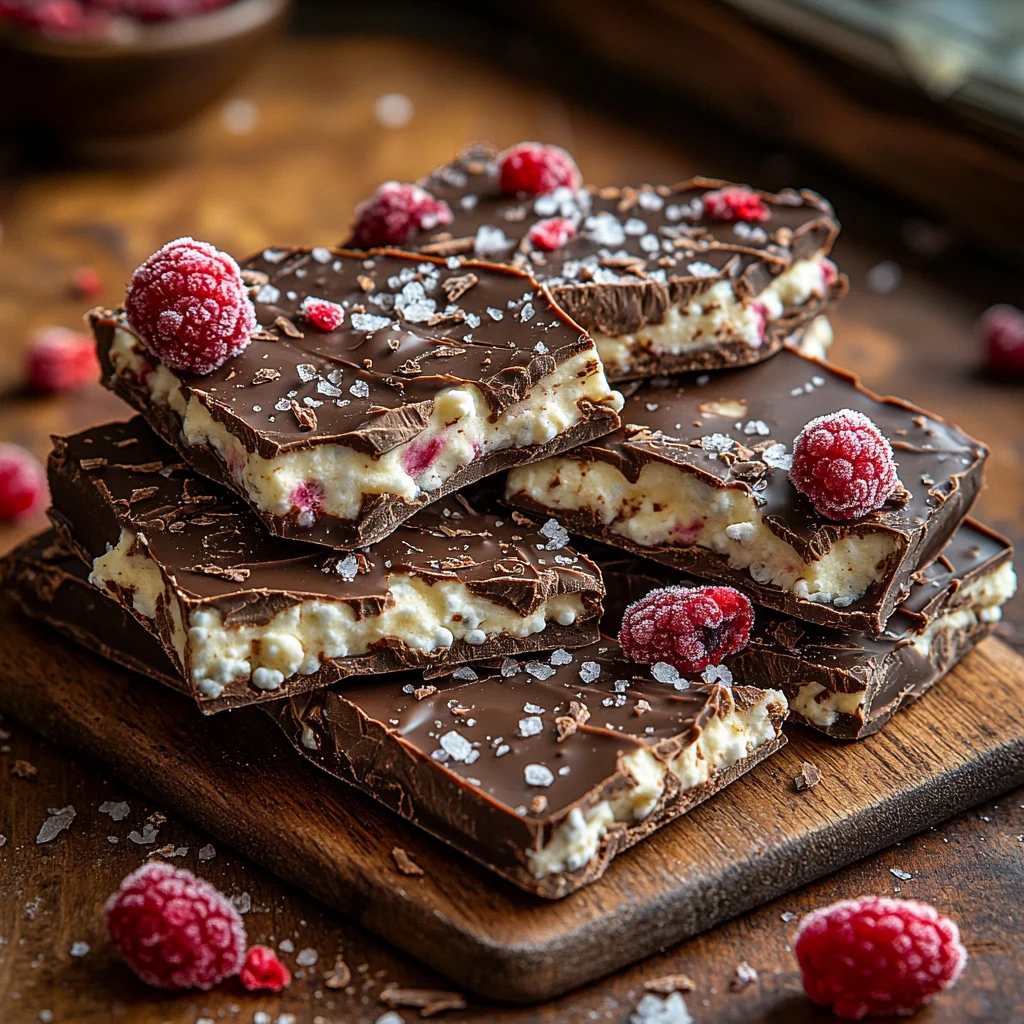
Frozen Cottage Cheese Chocolate Bark
Ingredients
Method
- Line a small baking sheet (about 9×9 inch) with parchment paper.
- In a blender or food processor, blend cottage cheese, melted chocolate, honey, vanilla, and salt until completely smooth.
- Pour the mixture onto the prepared baking sheet and spread evenly with a spatula.
- Sprinkle almonds, coconut, cranberries, chia seeds, and mini chocolate chips evenly over the top, pressing lightly to adhere.
- Freeze for at least 2 hours, or until completely firm.
- Remove from freezer and let sit at room temperature for 2-3 minutes before breaking into pieces.
- Store in an airtight container in the freezer for up to 2 weeks.


