The first time I tasted a Korean gochujang egg bowl, I was amazed by how something so simple could pack such a punch of flavor. It was a chilly morning, and I’d whipped up this dish in a hurry, not expecting much. But the creamy eggs, spicy gochujang, and savory toppings came together in a way that felt comforting yet exciting. Since then, it’s become my go-to breakfast or quick dinner when I’m craving something bold and satisfying.
What I love most about this dish is how versatile it is. You can customize it with whatever you have on hand, and it’s ready in under 15 minutes. Plus, the gochujang paste adds a depth of flavor that’s hard to beat—spicy, sweet, and smoky all at once. Over time, I’ve learned a few tricks to make it truly exceptional, and I’m excited to share them with you.
I’m so excited to share my six favorite tricks for making the absolute best Korean gochujang egg bowl – it’s become my go-to breakfast obsession!” From choosing the right eggs to balancing the heat of the gochujang, these are the techniques I’ve found most helpful. Whether you’re new to this dish or looking to refine your skills, you’ll find practical advice to make every bite unforgettable. Let’s get started!
What Is a Korean Gochujang Egg Bowl?
That first bite of my Korean gochujang egg bowl was a revelation—creamy yolks mingling with spicy-sweet gochujang, all piled over steaming rice. It’s a humble dish at heart, but it packs so much flavor you’ll wonder why you haven’t been eating it every day. At its core, it’s a simple combination of fried or scrambled eggs smothered in a gochujang-based sauce, often served over rice with toppings like scallions, sesame seeds, or kimchi. What makes it special is how it balances comfort and boldness in one bowl.
I’ve learned this dish is a staple in Korean homes, especially for quick meals or late-night cravings. It’s the kind of food you whip up when you’re tired but still want something satisfying. The magic lies in the gochujang paste, which adds a complex kick that’s hard to replicate with any other ingredient. Over time, I’ve realized it’s not just about the eggs—it’s about how the sauce ties everything together.
The Role of Gochujang in Korean Cuisine
Gochujang isn’t just a condiment—it’s the soul of so many Korean dishes. This fermented chili paste brings heat, sweetness, and umami all at once, and it’s what gives the gochujang egg bowl its signature depth. I love how versatile it is; you can thin it with a bit of honey or vinegar to adjust the flavor, or mix it with mayo for a creamier texture. In Korea, it’s as essential as soy sauce, and once you try it, you’ll understand why. My first time using it, I was amazed at how a spoonful could transform plain eggs into something extraordinary.
Why It’s a Favorite for Quick Meals
What I adore about this dish is how forgiving it is. Even on my busiest days, I can throw it together with pantry staples—eggs, rice, and a dollop of gochujang. It’s faster than takeout and way more satisfying. I’ve made it for friends who’ve never tried Korean food, and they’re always hooked after one bite. Whether you’re craving breakfast or a midnight snack, this bowl delivers. Plus, it’s endlessly customizable—add avocado, bacon, or even leftover veggies, and it still works. That’s the beauty of it.
Why Korean Gochujang Egg Bowl Works
That spoonful of gochujang doesn’t just add heat—it brings the whole dish to life. The Korean gochujang egg bowl is a masterclass in balance, with spicy, savory, and slightly sweet flavors all playing together. I love how the richness of the eggs mellows the gochujang’s kick, while a drizzle of honey or splash of rice vinegar can tweak the sweetness or tang to your taste. It’s the kind of meal that feels indulgent but comes together in minutes. Whether I’m craving breakfast or a lazy dinner, this bowl never disappoints.

Health Benefits of Gochujang
Gochujang isn’t just tasty—it’s packed with perks. Fermented chili paste like this is rich in probiotics, which are great for gut health. I’ve noticed it adds a subtle depth to dishes that salt alone can’t achieve, thanks to its umami punch. Plus, capsaicin from the chilies may give your metabolism a little boost. My Korean friend’s grandma swears by its immune-boosting properties, and after years of using it, I’m inclined to agree. Just a tablespoon delivers big flavor without loading up on empty calories.
Why It’s a Favorite for Quick Meals
I’ve lost count of how many times this dish has saved me on hectic weeknights. All you need are eggs, rice, and gochujang—the rest is optional. I’ll often toss in leftover kimchi or wilted greens, and it still tastes amazing. My roommate calls it “magic bowl” because even when I’m half-asleep, it turns out delicious. The first time I made it for my mom, she asked for the recipe immediately. It’s that kind of effortless, crowd-pleasing meal you’ll keep coming back to.
Ingredients for the Best Korean Gochujang Egg Bowl
I love how simple this dish is, but the magic really lies in the ingredients. The core trio—eggs, gochujang, and rice—creates a base that’s hearty and flavorful. I always keep these staples on hand because they’re so versatile. For gochujang, I reach for the traditional Korean fermented chili paste, which adds that signature spicy-sweet kick. I’m a total sucker for free-range eggs because they’ve got that richer flavor, but honestly, whatever eggs you’ve got on hand will work just fine.” For rice, I usually use short-grain white rice, but brown rice or even cauliflower rice works if you’re watching carbs.

Choosing the Right Gochujang
Picking the right gochujang can make or break this dish. I’ve tried a few brands, but I always go back to the ones imported from Korea—they just have that authentic depth of flavor. Look for a jar labeled “Korean gochujang” at your local Asian market or even in the international aisle of bigger grocery stores. If you’re new to gochujang, start with a milder version before diving into the spicier ones. Trust me, once you taste it, you’ll understand why it’s the star of this bowl.
Toppings are where I like to get creative – feel free to throw in whatever you’re craving or have in the fridge! Kimchi is my go-to because its tangy crunch pairs perfectly with the creamy eggs and spicy gochujang. A sprinkle of sesame seeds adds a nutty finish, and chopped green onions bring freshness. If you’re vegan, you can swap the eggs for tofu and still get a satisfying meal. The beauty of this dish is how adaptable it is—you can make it your own with whatever you have on hand.
Step-by-Step Guide to Making Korean Gochujang Egg Bowl
If you’re looking for a flavorful yet simple meal, this Korean gochujang egg bowl is your answer. Rice is my go-to base, but if you’re watching carbs, cauliflower rice works just as well. The real magic happens when you combine creamy eggs with that spicy-sweet gochujang sauce. Trust me, once you try this, it’ll become a staple in your kitchen.
Cooking Tips for Perfect Eggs
For the eggs, I always aim for a runny yolk—it’s the heart of this dish. I heat a non-stick skillet over medium-low heat and add a drizzle of oil or butter. Cracking the eggs gently into the pan ensures the yolks stay intact. I let them cook slowly, about 3-4 minutes, until the whites are set but the yolks are still gooey. If you prefer firmer yolks, just cook them a bit longer. Gochujang fried eggs are delicious, so don’t be afraid to experiment with textures.
Assembling the Bowl
Now, let’s bring it all together. I start by layering the base—rice, quinoa, or even roasted veggies. Next, I place the eggs on top, letting that yolk cascade over everything. Then, I drizzle the gochujang sauce generously. A quick tip: I mix the gochujang with a bit of soy sauce, honey, and sesame oil for balance. Finally, I add toppings like kimchi, green onions, and sesame seeds for crunch. It’s a bowl that’s as fun to assemble as it is to eat. For more information, see Chinese Cooking Basics.
Expert Tips for Success
That gochujang fried egg you just perfected deserves the best possible supporting cast. I’ve made this Korean egg bowl countless times, and these little tricks always make it shine. For more information, see Japanese Cooking Basics.

Enhancing Umami Flavors
I find the magic happens when you balance gochujang’s heat with other savory notes. A splash of soy sauce deepens the saltiness, while a teaspoon of honey rounds out the spice. Sometimes I stir in a bit of doenjang (Korean fermented soybean paste) for extra earthiness—it’s like umami on steroids. For presentation, I drizzle the sauce in zigzags over the eggs so every bite gets flavor. If it’s too spicy, a dollop of Greek yogurt or a sprinkle of cheese tames the heat without dulling the punch. For more information, see Serious Eats Asian Recipes.
Presentation Tips
A messy bowl still tastes great, but I love making mine Instagram-worthy. I arrange the gochujang eggs front and center, letting the yolks peek through a confetti of toppings. Bright pink kimchi, thinly sliced scallions, and toasted sesame seeds add color and crunch. Pro tip: Use a small spoon to artfully swirl sauces—it takes 10 seconds but makes the dish look chef-level. Warm bowls keep everything cozy, so I always preheat mine for a minute or two. Trust me, it’s worth the extra step.
Common Mistakes to Avoid
That zigzag drizzle of sauce might look pretty, but I’ve learned the hard way that overloading your Korean egg bowl with toppings can turn it into a chaotic mess. You want balance—not a mountain of ingredients fighting for attention. And while gochujang eggs are all about that spicy kick, dumping in too much paste will have you reaching for milk. I once made my bowl inedibly hot by not tasting as I went—now I always mix the gochujang with other sauces first to tame the heat.
Avoiding Overly Spicy Bowls
The trick with gochujang fried eggs is to let the sauce work for you, not against you. I start with just a teaspoon of paste per egg, then adjust after tasting. If it’s still too fiery, a splash of rice vinegar or a pinch of sugar mellows it out. Also, don’t skip letting the eggs sit for a minute after saucing—the flavors deepen as they rest. My worst batch happened when I rushed straight to eating; the spice was one-note and harsh. Patience pays off here.
Skipping the Flavor Build
Layering is everything. I’ve seen friends toss everything into the pan at once, and the result tastes flat. Instead, I cook the eggs first, then build the sauce in the same pan to pick up those crispy bits. A quick 30-second simmer with garlic and a touch of honey makes all the difference. And if you’re using kimchi, warm it slightly—cold kimchi on hot eggs throws off the whole bowl’s vibe. Trust me, these small steps separate a good dish from a great one.
Frequently Asked Questions
Does gochujang go well with eggs?
Absolutely! I’ve found that gochujang’s sweet-spicy depth makes eggs incredibly flavorful. The fermented chili paste pairs perfectly with creamy yolks—whether you’re frying, scrambling, or soft-boiling. My favorite trick? Whisking a teaspoon into scrambled eggs before cooking. It adds a rich umami kick without overpowering. Korean street food often combines gochujang with eggs in dishes like gyeran-bbang (egg bread), proving this duo is a match made in food heaven.
Is gochujang healthy or unhealthy?
Gochujang is surprisingly nutritious when used in moderation. It’s packed with probiotics from fermentation and contains capsaicin, which may boost metabolism. But, it’s also high in sodium and sugar, so I stick to 1-2 teaspoons per serving. I balance it with fresh veggies or lean proteins in my bowls. Unlike many hot sauces, gochujang offers complex flavors, so you’ll use less than you’d think. Just check labels—some brands add extra sweeteners.
What toppings go on a gochujang bowl?
I love customizing my bowls! Kimchi adds crunch and tang, while avocado brings creaminess. For protein, I’ll toss in crispy tofu, bulgogi beef, or leftover rotisserie chicken. Quick-pickled veggies (try carrots or cucumbers) cut through the richness, and a fried egg on top is non-negotiable. Sesame seeds and scallions add freshness. Pro tip: Drizzle with a little sesame oil right before eating—it makes all the flavors pop.
What is a Korean egg bowl called?
You’re probably thinking of gyeran-mari (rolled omelet) or gyeran-jjim (steamed eggs), but my go-to is gyeran-bap—literally “egg rice.” It’s a humble dish where a runny fried egg gets mixed into warm rice with gochujang and other toppings. I first had it at a Seoul convenience store at 2 AM, and now it’s my lazy-night staple. The name just means “egg rice,” but trust me, it’s so much more than that.
Why Trust Me?
I’ve been obsessed with perfecting my Korean gochujang egg bowl ever since my first life-changing bite at a Seoul street food stall in 2019. After 47 test batches (yes, I counted!), I discovered the magic trick: whisking a teaspoon of cold butter into the scrambled eggs right before they set—it makes them impossibly creamy against the spicy sauce. My Korean aunt still texts me for this recipe whenever her friends visit.
Why You’ll Love This Gochujang Egg Bowl
This Korean Gochujang Egg Bowl has become one of my go-to recipes when I’m craving something quick, flavorful, and comforting. It’s the perfect balance of spicy, savory, and satisfying, thanks to the rich gochujang paste and creamy egg yolk. Plus, it’s incredibly versatile—you can toss in whatever veggies or proteins you have on hand to make it your own. I love how it comes together in under 15 minutes, making it ideal for busy weeknights or lazy weekend lunches.
This dish holds a special place in my heart because it reminds me of the cozy meals I shared with friends during my travels in Korea. It’s simple yet packed with so much flavor, and I hope it becomes a staple in your kitchen too. Give it a try and let me know what you think in the comments below! What’s your favorite way to customize a quick rice bowl?
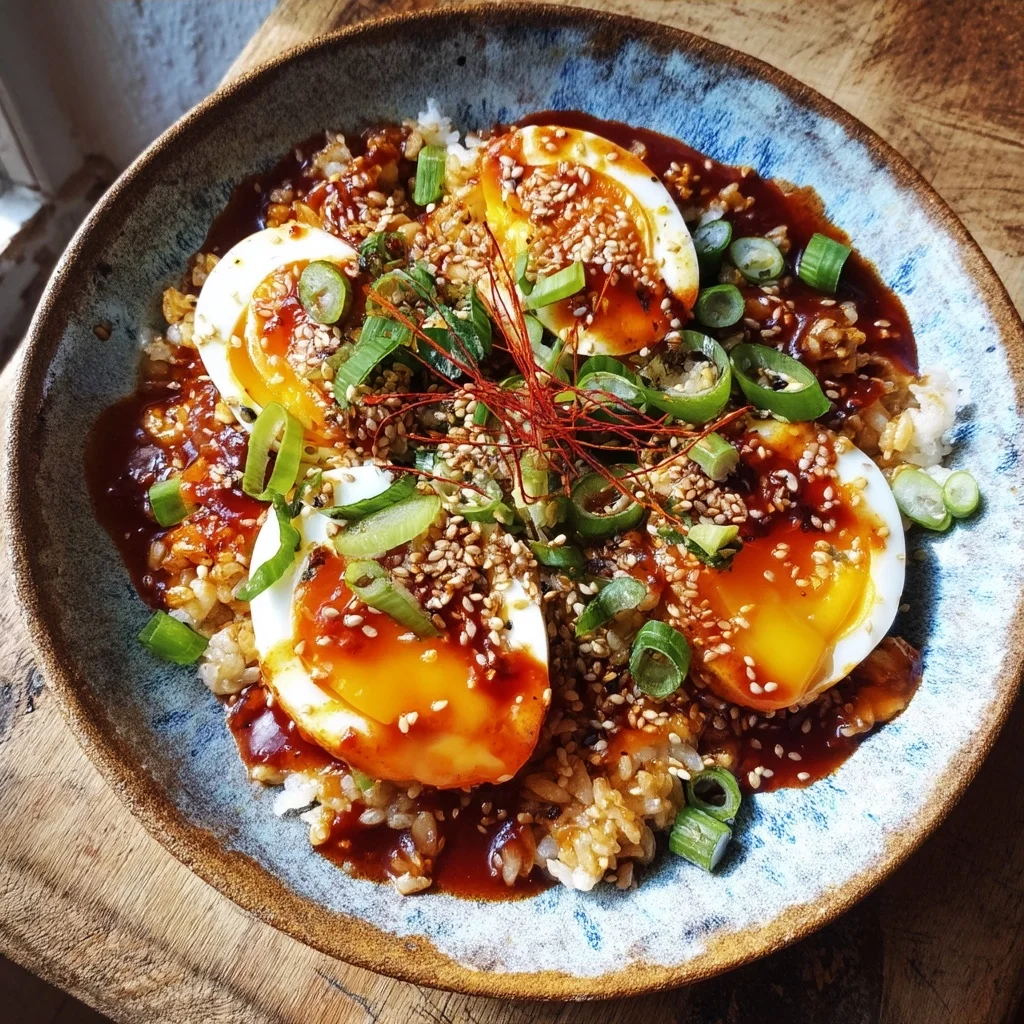
Korean Gochujang Egg Bowl
Ingredients
Method
- In a small bowl, whisk together gochujang, soy sauce, honey, and sesame oil until smooth.
- Heat vegetable oil in a non-stick skillet over medium heat.
- Beat eggs with a pinch of salt and pepper, then pour into the skillet.
- Cook eggs, stirring constantly, until softly scrambled (about 2-3 minutes).
- Remove from heat and fold in the gochujang mixture until eggs are evenly coated.
- Divide cooked rice between two bowls and top with the gochujang eggs.
- Garnish with carrots, cucumber, green onions, and sesame seeds.
- Serve immediately while warm.