

The moment those juicy grilled chicken thighs hit the grill, that sizzle and smoky aroma takes me straight back to my grandma’s backyard cookouts. She’d always say, “Chicken thighs don’t lie—if you treat ’em right, they’ll reward you.” And boy, was she right. After years of trial and error (and a few dry disasters), I’ve cracked the code for perfectly juicy grilled chicken thighs every single time.
You’ll learn my 7 fail-proof tips, from choosing the right cut to nailing the grill temp. I’ll share why I always pick bone-in, skin-on thighs (hint: it’s all about flavor and moisture), and my secret for crispy skin without overcooking. Plus, the simple marinade trick that’s saved me from bland chicken more times than I can count.
Grilling chicken thighs shouldn’t feel like a high-stakes game. Whether you’re feeding a crowd or just craving that smoky goodness, these techniques work whether you’ve got a fancy gas grill or a trusty charcoal kettle. So grab your tongs—I’ll show you how to turn humble chicken thighs into the juiciest, most flavorful star of your next cookout. Trust me, once you try these methods, you’ll never go back to dry chicken again.
What Makes Juicy Grilled Chicken Thighs So Good
That “thighs don’t lie” wisdom I mentioned earlier? It all comes down to science and smart grilling choices. I used to think chicken breasts were the only way to go—until I discovered how forgiving and flavorful grilled chicken thighs really are. Here’s why they’re my go-to for foolproof juicy results every time.

Fat Content and Juiciness
Chicken thighs have a higher fat content than breasts, which means they stay moist even if you accidentally overcook them a bit. I’ve pulled thighs off the grill a few minutes late and still ended up with tender, juicy chicken thighs—something that’d never happen with leaner cuts. That marbled fat also caramelizes beautifully, giving you that craveable crispy skin.
Bone-In vs. Boneless
While boneless thighs cook faster, I always choose bone-in for bbq chicken thighs. The bone acts like a heat buffer, preventing the meat from drying out. Plus, it adds deeper flavor—just like grandma’s roasted chicken. If I’m in a hurry, I’ll butterfly boneless thighs to cook evenly, but for maximum juiciness, bone-in wins every time.
Essential Ingredients for Juicy Grilled Chicken Thighs
After years of trial and error, I’ve learned that grilled chicken thighs shine when you start with the right foundation. The cut itself does most of the work, but a few key ingredients take it from good to “lick-the-plate” delicious.

Choosing the Right Chicken Thighs
I always look for thighs with even thickness—no jagged edges—so they cook uniformly. Skin-on is non-negotiable for me; that crispy layer protects the meat and bastes it in its own fat. If I’m hosting a crowd, I’ll grab family packs, but for weeknights, I hand-pick smaller thighs that cook faster.
Marinade Basics
My go-to marinade has three essentials: olive oil (for richness), lemon juice or vinegar (to tenderize), and garlic (because flavor). Sometimes I’ll swap in yogurt for extra tang, especially with bbq chicken thighs. A 30-minute soak does wonders, but overnight turns them into juicy chicken thighs with deep, herby notes.
Step-by-Step Guide to Juicy Grilled Chicken Thighs
After marinating those bbq chicken thighs to perfection, it’s time to fire up the grill. I’ve ruined enough batches to know that nailing the technique makes all the difference between dry disappointment and juicy chicken thighs with crackling skin.
Prepping the Grill
I always preheat my grill to medium-high (about 375°F) for 10-15 minutes—this prevents sticking and gives those grilled chicken thighs those gorgeous sear marks. A quick scrape with a wire brush cleans off any old residue, then I lightly oil the grates with a folded paper towel dipped in vegetable oil. Trust me, that extra minute saves so much frustration later.
Grilling Technique
Place the thighs skin-side down first—this renders the fat slowly, basting the meat as it cooks. I resist the urge to peek for at least 6-8 minutes until the skin releases easily. Flip them only once, and pull them off at 165°F internal temp (I use an instant-read thermometer). Letting them rest for 5 minutes keeps every bite juicy.
Expert Tips for Perfect Juicy Grilled Chicken Thighs
Once you’ve mastered the grilling technique, it’s all about those finishing touches that turn good grilled chicken thighs into great ones. I’ve learned the hard way that overcooking or rushing the process can ruin even the best-prepared bbq chicken thighs. Here’s how I guarantee juicy, flavorful results every time.
Using a Meat Thermometer
I swear by my instant-read thermometer—it’s the secret to perfectly juicy chicken thighs. Pulling them off at exactly 165°F ensures they’re cooked through without drying out. I insert the thermometer into the thickest part of the thigh, avoiding the bone, for an accurate reading. Trust me, guessing don’t cut it, especially with dark meat.
Resting the Chicken
Once the thighs hit 165°F, I take them off the grill and let them rest for 5 minutes. This lets the juices redistribute, so every bite stays moist. I used to skip this step, but now I know it’s non-negotiable for juicy chicken thighs. Plus, it gives me time to set the table without rushing.
Common Mistakes to Avoid
Getting those finishing touches right is crucial for grilled chicken thighs, but I’ve found that avoiding a few common mistakes makes all the difference. Trust me, I’ve learned this the hard way after serving up dry, flavorless thighs more times than I’d like to admit.
Overcooking
Overcooking is the biggest culprit behind dry grilled chicken thighs. I used to think leaving them on longer would make them safer, but it just sapped all the moisture. Now, I pull them off at 165°F—that’s the sweet spot. Dark meat can handle a little pink, but overcooking turns it rubbery. A meat thermometer is my best friend here, and I never skip it.
Skipping the Marinade
I’ll admit, I’ve been tempted to skip the marinade when I’m in a hurry, but it’s a mistake I regret every time. Marinating locks in flavor and keeps juicy chicken thighs tender. Even a quick 30-minute soak makes a huge difference. My go-to blend includes olive oil, garlic, and lemon juice, and it never lets me down. Grilling at medium heat helps too—too high, and you’ll burn the outside before the inside cooks through.
Variations and Substitutions
After mastering the basics of avoiding overcooking and always using a marinade, it’s time to get creative with your grilled chicken thighs. I love experimenting with flavors and methods to keep things exciting. Whether you’re swapping marinades or trying a different cooking technique, there’s always room to mix it up.
Marinade Variations
My go-to marinade is olive oil, garlic, and lemon juice, but I’ve found that switching it up can transform your juicy chicken thighs completely. For a tangy twist, try balsamic vinegar, honey, and rosemary—it’s a crowd-pleaser. If you’re craving something spicy, blend chili powder, lime juice, and a touch of maple syrup for a smoky-sweet kick. Sometimes, I’ll even use yogurt-based marinades with cumin and paprika for a Middle Eastern vibe. The key is letting the thighs soak for at least 30 minutes—trust me, it’s worth the wait.
Grilling vs. Baking
While I adore the charred, smoky flavor of bbq chicken thighs straight off the grill, baking is a fantastic alternative, especially when the weather doesn’t cooperate. I’ll bake them at 400°F for about 25 minutes, flipping halfway through. Baking keeps them moist, though you’ll miss that signature grill marks. If you’re short on time or don’t have a grill, this method still delivers tender, flavorful results. Either way, you can’t go wrong!
Nutritional Benefits of Chicken Thighs
Whether you’re grilling or baking your juicy chicken thighs, it’s worth knowing how nutritious they can be. I love how versatile they are, but they’re also packed with benefits that make them a smart choice for any meal.
Protein and Fat Content
Chicken thighs are a fantastic source of protein, with one thigh providing about 20 grams—perfect for keeping you full and satisfied. I’ve found that the slightly higher fat content compared to chicken breasts adds richness and flavor, making them juicier when grilled. While they do contain more cholesterol, I believe the balance of healthy fats and protein makes them a great option for active lifestyles. Just pair them with veggies or a light salad to keep it balanced.
Chicken Thighs for Diabetics
As someone who’s cooked for friends with diabetes, I’ve learned that grilled chicken thighs can be a diabetic-friendly choice. They’re low in carbs and high in protein, which helps stabilize blood sugar levels. Plus, the fat content slows digestion, preventing spikes. I always recommend using marinades with minimal added sugar, like olive oil and garlic, to keep it healthy. It’s a delicious way to enjoy a meal without worrying about your glucose levels.
Serving Suggestions and Pairings
Since grilled chicken thighs are packed with protein and healthy fats, pairing them with the right sides and drinks can turn them into a complete meal. I always aim for balance—something fresh to complement the richness of the chicken. Over the years, I’ve discovered that classic BBQ sides and a good glass of wine can make this dish feel like a feast. Let me share some of my go-to pairings that never disappoint.

Classic BBQ Sides
When I grill juicy chicken thighs, I love serving them with classic BBQ sides that bring out their smoky flavor. My favorite combo is creamy coleslaw and cornbread—the crunch and sweetness balance the savory chicken perfectly. Sometimes, I’ll add grilled corn on the cob or baked beans for a hearty touch. For a lighter option, I toss together a simple potato salad with a tangy dressing. These sides are easy to prepare and always crowd-pleasers.
Wine Pairings
Pairing wine with bbq chicken thighs can elevate the meal without much effort. I’ve found that a chilled glass of Sauvignon Blanc works wonders—its crisp acidity cuts through the richness of the chicken. For red wine lovers, a light Pinot Noir complements the smoky flavors beautifully. If you’re not into wine, a cold beer like a lager or pale ale is a fantastic alternative. These drinks add a refreshing finish to every bite.
Storing and Reheating Juicy Grilled Chicken Thighs
After enjoying those smoky bbq chicken thighs with all the fixings, you’ll likely have leftovers—which is great because they’re just as tasty the next day. I’ve learned a few tricks over the years to keep them juicy and flavorful, whether you’re storing them for lunch or freezing for later.
Storage Tips
I always let my grilled chicken thighs cool completely before storing them—this prevents condensation that can make the skin soggy. For best results, I place them in an airtight container with a paper towel to absorb excess moisture. They’ll stay fresh in the fridge for 3-4 days. If I’m freezing them, I wrap each thigh tightly in foil first, then pop them in a freezer bag. They’ll keep for up to 3 months this way.
Reheating Techniques
Nothing’s worse than dry chicken, so I reheat leftovers gently. My go-to method is the oven at 325°F—I place the thighs on a baking sheet with a splash of broth or water to keep them moist. For a quicker fix, the microwave works if I cover them with a damp paper towel and heat in short bursts. Either way, I always check the internal temperature hits 165°F before serving.
Frequently Asked Questions
How to keep chicken thighs moist when grilling?
I’ve found that keeping chicken thighs juicy on the grill comes down to a few key tips. First, marinate them for at least 30 minutes (or overnight) to lock in moisture. I love using olive oil, lemon juice, and herbs for this. Second, cook them over medium heat—too high, and they’ll dry out. Finally, let them rest for 5 minutes after grilling so the juices redistribute. Trust me, these steps make a world of difference!
Are chicken thighs good for diabetics?
Yes, chicken thighs can be a great option for diabetics when prepared right. They’re high in protein, which helps stabilize blood sugar levels. I recommend removing the skin and avoiding sugary marinades to keep it healthier. Pair them with veggies or a salad for a balanced meal. My diabetic friend swears by grilled chicken thighs as a go-to dinner—it’s filling, flavorful, and won’t spike blood sugar if eaten in moderation.
How to cook chicken thighs so they are tender and juicy?
To ensure tender, juicy chicken thighs, I always cook them slow and steady. Grilling over medium heat works perfectly, but you can also bake or pan-sear them. I use a meat thermometer to check for an internal temp of 165°F—this avoids overcooking. Brining or marinating beforehand also helps. My favorite trick? Adding a splash of chicken broth or butter at the end of cooking. It’s like a flavor and moisture booster!
Are chicken thighs good for cholesterol?
Chicken thighs do have more fat than breasts, but they’re not necessarily bad for cholesterol. The key is moderation and smart cooking methods. I suggest trimming excess fat and removing the skin to reduce saturated fat. Grilling or baking instead of frying also helps. Plus, chicken thighs are packed with nutrients like iron and zinc. If you’re watching cholesterol, pair them with fiber-rich sides like roasted veggies or quinoa. Balance is everything!
Why Trust Me?
I’ve been grilling chicken thighs every summer for the past 6 years, and I’ve learned exactly how to keep them juicy and flavorful. Once, I overcooked them into dry hockey pucks, but now I swear by my secret trick: letting them sit in a simple marinade for at least 2 hours. My family calls them “the best grilled chicken thighs ever,” and I’m excited to share my foolproof method with you!
Wrapping It Up
Grilling juicy chicken thighs doesn’t have to be intimidating—it’s all about the right marinade, heat control, and patience. I’ve shared my favorite tips for getting that perfect char while keeping the meat tender and flavorful. Plus, the versatility of this recipe means you can pair it with just about anything, from fresh salads to grilled veggies.
This recipe holds a special place in my heart because it’s become a staple at my family gatherings. There’s nothing better than seeing everyone’s faces light up when they take that first bite.
I’d love for you to give this recipe a try and make it your own. Once you do, let me know how it turned out in the comments below! What’s your favorite side dish to serve with grilled chicken? I’m always looking for new ideas to spice up my meals!
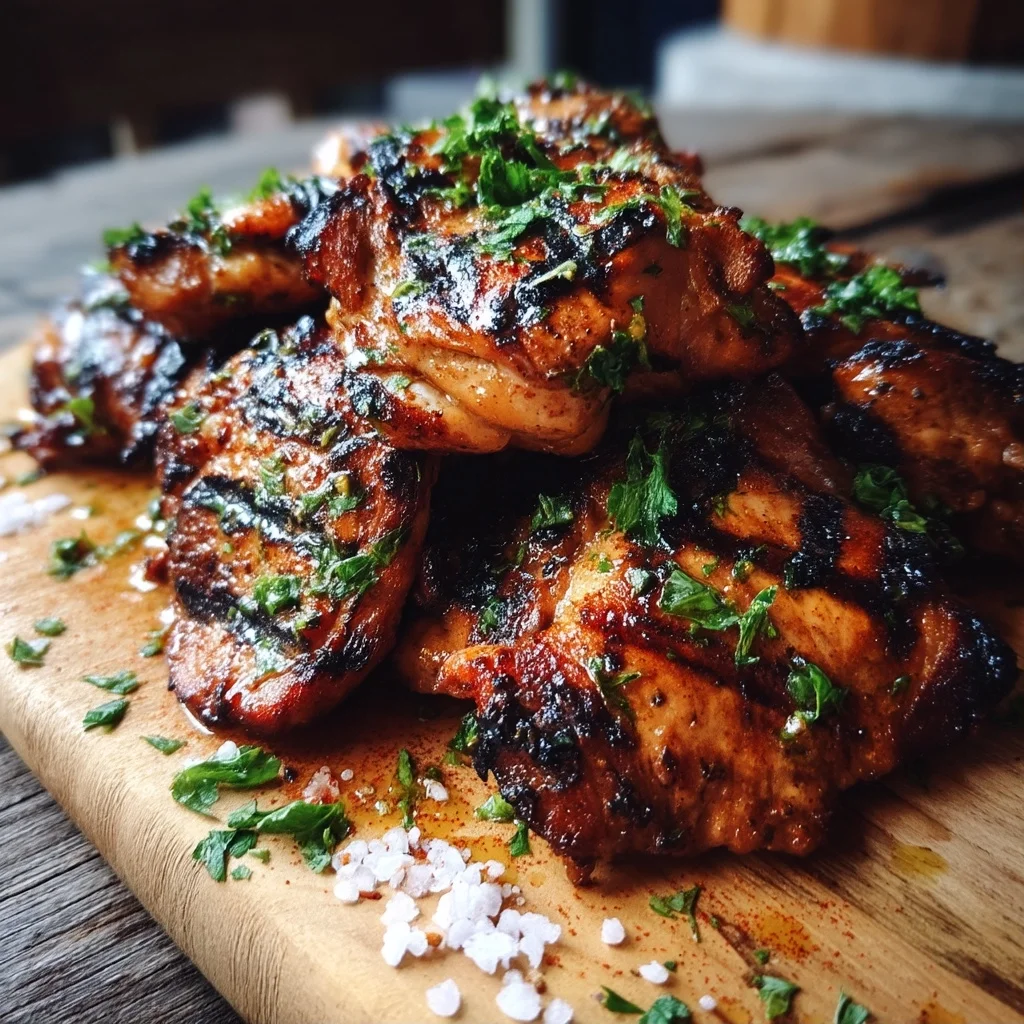
JUICY GRILLED CHICKEN THIGHS
Ingredients
Method
- In a bowl, whisk together olive oil, garlic, rosemary, thyme, paprika, salt, pepper, lemon juice, and red pepper flakes.
- Pat chicken thighs dry with paper towels and place in a large ziplock bag.
- Pour marinade over chicken, seal bag, and massage to coat evenly. Refrigerate for at least 30 minutes (or up to 4 hours).
- Preheat grill to medium-high heat (about 400°F). Clean and oil grates.
- Remove chicken from marinade, letting excess drip off. Place skin-side down on grill.
- Grill for 6-7 minutes per side, until internal temperature reaches 165°F and skin is crispy.
- Transfer to a platter and let rest for 5 minutes before serving.


