Imagine the sweet, tropical aroma of ripe mangoes filling your kitchen as you scoop into a bowl of smooth, icy mango sorbet. It’s pure summer in every bite. I’ve been making this refreshing dessert for years, and it’s become my go-to treat for hot days or when I’m craving something light yet indulgent. One summer, I hosted a dinner party and served homemade mango sorbet as the finale—my guests couldn’t stop raving about it. That’s when I realized how simple yet impressive this dessert can be when done right.
In this article, I’ll share 7 secrets to perfect mango sorbet that actually works. Whether you’re a beginner or just looking to refine your technique, these tips will help you avoid common pitfalls and create a sorbet that’s creamy, flavorful, and bursting with mango goodness. I’ll walk you through everything from choosing the best mangoes to mastering the right sugar ratio and freezing method. Plus, I’ll share a few tricks I’ve picked up over the years to make your sorbet stand out. By the end, you’ll have all the tools you need to whip up a batch that’s restaurant-worthy. Let’s get started—your perfect mango sorbet is just a few steps away!
What Is Mango Sorbet?
After that dinner party where I served homemade mango sorbet, I realized how much people adore this refreshing dessert. So, what exactly is it? Mango sorbet is a frozen treat made primarily from ripe mangoes, sugar, and water. Unlike ice cream, it doesn’t contain dairy or eggs, which makes it lighter and perfect for those who are lactose intolerant or vegan. I’ve found that its smooth, fruity texture and intense mango flavor make it irresistible, especially during summer. It’s like biting into a frozen mango, but creamier and more refreshing. Plus, it’s surprisingly easy to make at home with just a few simple ingredients and an ice cream maker.
The History of Sorbet
Sorbet has a long and fascinating history that dates back centuries. I learned that it originated in ancient Persia, where it was made with snow, fruit, and honey. Later, it spread to Europe, where it became a luxurious dessert enjoyed by royalty. Today, sorbet is loved worldwide for its simplicity and versatility. I’ve always been drawn to its clean, pure flavors, and mango sorbet is one of my favorites because it captures the essence of ripe mangoes perfectly. It’s a dessert that feels both indulgent and healthy, which is why I keep coming back to it.
Why Mango Sorbet Works
Mango sorbet’s appeal lies in its simplicity and refreshing taste. Since it doesn’t contain dairy or eggs, it’s a lighter alternative to ice cream, making it perfect for those who are lactose intolerant or vegan. I’ve found that its smooth, fruity texture and intense mango flavor make it irresistible, especially during summer. It’s like biting into a frozen mango, but creamier and more refreshing. Plus, it’s surprisingly easy to make at home with just a few simple ingredients and an ice cream maker.

Nutritional Benefits
Mangoes are packed with vitamins like A and C, which support immune health and skin vibrancy. I love that mango sorbet lets me enjoy these benefits in a dessert form. Unlike traditional ice cream, it’s lower in calories and fat, making it a healthy treat I don’t feel guilty about. The recipe’s simplicity—just ripe mangoes, sugar, and water—means I can whip it up quickly whenever I’m craving something sweet and cooling.
The History of Sorbet
Sorbet has a long and fascinating history that dates back centuries. I learned that it originated in ancient Persia, where it was made with snow, fruit, and honey. Later, it spread to Europe, where it became a luxurious dessert enjoyed by royalty. Today, sorbet is loved worldwide for its simplicity and versatility. I’ve always been drawn to its clean, pure flavors, and mango sorbet is one of my favorites because it captures the essence of ripe mangoes perfectly. It’s a dessert that feels both indulgent and healthy, which is why I keep coming back to it.
Ingredients for Mango Sorbet
What I love most about mango sorbet is how simple it is to make. You only need a few ingredients to create a dessert that feels both indulgent and refreshing. The essentials are ripe mangoes, sugar, and a splash of lime juice for balance. Sometimes, I’ll add a pinch of salt to enhance the flavors or a bit of water to adjust the texture. If I’m feeling adventurous, I’ll throw in a handful of fresh mint or a drizzle of honey for a fun twist. The beauty of this recipe is that it’s so versatile—you can tweak it to suit your taste.

Choosing the Best Mangoes
Picking the right mangoes is key to making the perfect sorbet. I always look for mangoes that are fragrant and slightly soft to the touch—they’re the sweetest and most flavorful. My go-to varieties are Alphonso and Ataulfo because they’re naturally creamy and rich. If you’re unsure, give them a gentle squeeze; they should yield a little but not feel mushy. I avoid mangoes with wrinkled skin or dark spots—they’re usually overripe. Trust me, starting with the best mangoes makes all the difference in this recipe.
Step-by-Step Guide to Making Mango Sorbet
Once you’ve picked the perfect mangoes, it’s time to transform them into a smooth, refreshing sorbet. I love how simple this recipe is—just a few steps and you’ve got a healthy dessert that’s bursting with tropical flavor. The key is to balance the sweetness of the mangoes with a touch of lime juice and sugar, creating a blend that’s irresistibly creamy.
Using an Ice Cream Maker
First, peel and dice your mangoes, removing the pit. I like to blend them until they’re perfectly smooth—this ensures no chunks ruin the texture. Then, I mix in the sugar, lime juice, and a pinch of salt, tasting as I go. If it’s too thick, I’ll add a splash of water. Next, I pour the mixture into my ice cream maker and let it churn for about 20 minutes. The result? A silky sorbet that’s ready to scoop and enjoy!
Expert Tips for Perfect Mango Sorbet
Getting that silky texture from your ice cream maker is just the beginning—keeping your sorbet fresh and flavorful is where the real magic happens. I’ve learned a few tricks over the years to make sure every scoop stays as dreamy as the first. For more information, see King Arthur Desserts.

Storing Your Sorbet
I always press a piece of parchment paper directly onto the surface of the sorbet before freezing—it prevents ice crystals from forming. For the best texture, let it freeze for at least 4 hours, though overnight is ideal. A squeeze of lime juice not only brightens the flavor but also helps maintain that vibrant color. For more information, see Serious Eats Desserts.
Enhancing Flavor with Lime
Don’t skip the lime! I add a tablespoon of fresh juice to my mango puree—it cuts through the sweetness and makes the mango taste even more tropical. If your sorbet tastes flat, a pinch of salt can work wonders too. Trust me, these little tweaks turn a good recipe into something unforgettable. For more information, see Sally’s Baking Addiction.
Common Mistakes to Avoid
While mango sorbet is a healthy and refreshing treat, I’ve seen a few missteps that can turn this simple recipe into a disappointment. From choosing the wrong fruit to mishandling the freezing process, these slip-ups are easy to avoid if you know what to watch for. Let’s fix those common issues so your sorbet comes out perfect every time.
Fixing Common Issues
First, never use unripe mangoes—they’re too tart and lack the sweetness your sorbet needs. I always go for ripe mangoes that smell fragrant and yield slightly when pressed. Over-blending is another pitfall—it can make your mixture too frothy and affect the texture. I blend just until smooth, then stop. Finally, don’t rush the freezing process. Skipping the ice cream maker or not freezing long enough can leave you with a slushy mess instead of that creamy scoop you’re craving.
Variations and Substitutions
After perfecting the basics of my mango sorbet recipe, I love experimenting with creative twists to keep things exciting. Adding other fruits like pineapple or passionfruit can bring a new layer of flavor. I’ve also tried using alternative sweeteners like honey or agave syrup instead of sugar for a healthier version. These small changes can make a big difference without compromising the refreshing taste. Plus, if you’re feeling adventurous, a splash of coconut milk or lime juice can give it a tropical twist that’s perfect for summer.
Wine Pairing Suggestions
Pairing mango sorbet with wine might sound unusual, but trust me, it’s a match made in heaven. I find that a crisp Riesling or a sparkling Prosecco complements the sorbet’s sweetness beautifully. For a bolder choice, try a Moscato—its fruity notes echo the mango’s natural flavors. Serving this dessert with a glass of wine elevates any dinner party or summer gathering. It’s a simple way to impress your guests while keeping things light and refreshing.
Frequently Asked Questions
Is mango sorbet healthy?
Yes, mango sorbet can be a healthy treat when enjoyed in moderation! Since it’s typically made with just ripe mangoes, sugar, and water (or sometimes lemon juice), it’s naturally dairy-free and fat-free. Mangoes pack vitamins A and C, plus fiber, but keep in mind the sugar content—both from the fruit and any added sweeteners. I like to use less sugar in mine and let the mango’s natural sweetness shine. Compared to creamy desserts, it’s lighter, but portion control still matters. For an extra boost, I’ll sometimes blend in chia seeds or swap sugar for honey.
What is a mango sorbet?
Mango sorbet is a refreshing, fruity frozen dessert made by blending mango purée with sweetener (like sugar or honey) and a bit of liquid (water or citrus juice). Unlike ice cream, it contains no dairy or eggs, giving it a bright, intense mango flavor and a slightly icy texture. I love how simple it is—just freeze the mixture and churn it occasionally for smoothness. Some recipes add a splash of lime or ginger for zing. It’s perfect for hot days or as a palate cleanser between courses. My trick? Use super-ripe mangoes for the best natural sweetness.
Is mango sorbet healthier than ice cream?
Generally, yes! Mango sorbet is lower in calories and fat since it skips the cream and eggs found in traditional ice cream. A half-cup serving might have around 100-120 calories, compared to 150-200 for vanilla ice cream. Plus, it’s lactose-free and vegan-friendly. That said, watch the sugar—some sorbets have as much (or more) sugar than ice cream. I balance it by using less added sugar and opting for fresh fruit. For a creamier but still light option, try blending in coconut milk. Either way, both are treats—enjoy mindfully!
Why Trust Me?
I’ve been making mango sorbet every summer for the past 5 years, and I’ve perfected the balance of sweetness and tanginess. After one batch turned out too icy, I learned the trick of adding a splash of lime juice to keep it smooth. My mom, who’s picky about desserts, declared this her favorite treat—so I know it’s a winner!
Why You’ll Love This Mango Sorbet
This mango sorbet is the perfect way to celebrate summer’s sweetest fruit. It’s refreshingly simple, requiring just a handful of ingredients, and the creamy texture feels indulgent without any dairy. Plus, it’s naturally vegan and gluten-free, making it a crowd-pleaser for everyone.
This recipe holds a special place in my heart because it reminds me of lazy afternoons spent with my family, scooping sorbet straight from the freezer. It’s a treat that never fails to bring smiles to the table.
Now it’s your turn—give this recipe a try and let me know how it turns out! I’d love to hear your thoughts in the comments below. Do you have a favorite way to enjoy mangoes? Share your ideas—I’m always looking for new inspiration!
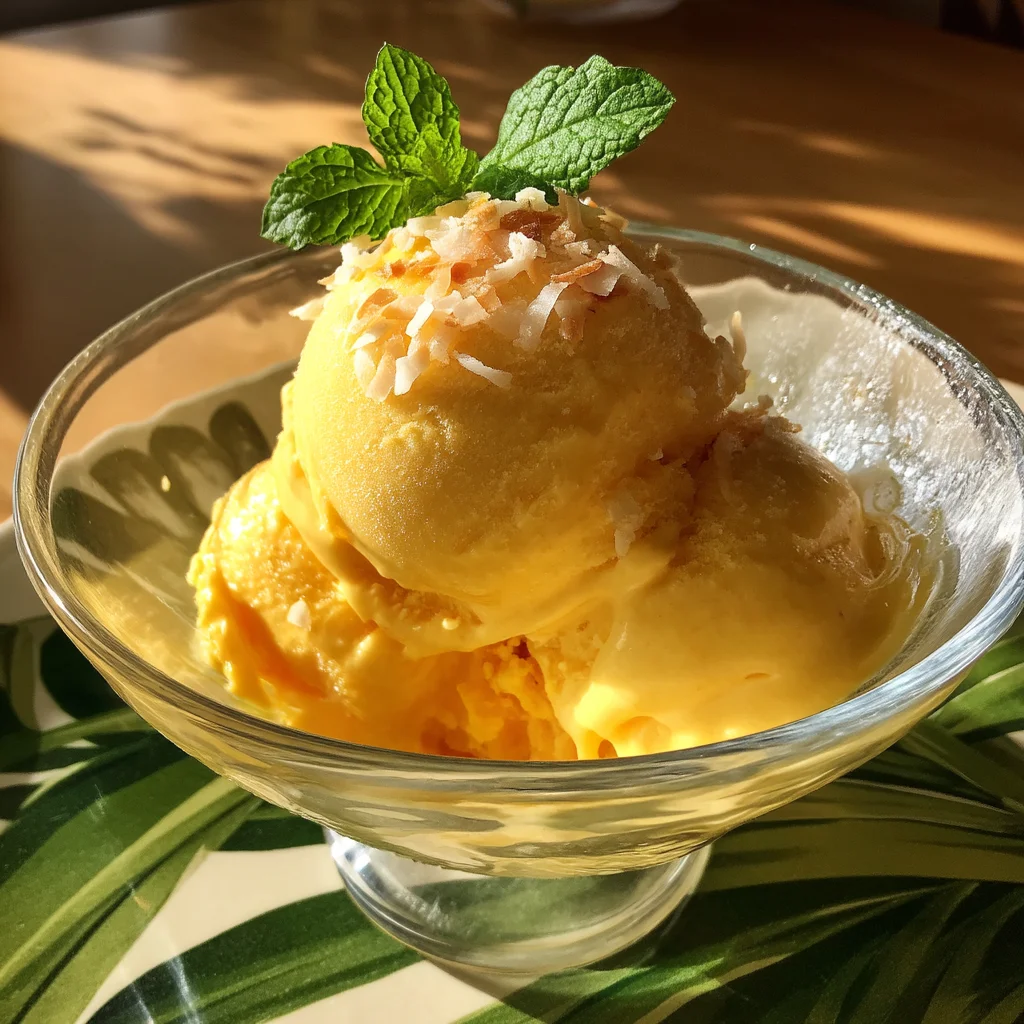
MANGO SORBET
Ingredients
Method
- Peel and chop mangoes into 1-inch chunks, measuring 4 packed cups.
- In small saucepan, combine sugar and water. Heat over medium until sugar dissolves completely (about 3 minutes). Let cool.
- In blender, puree mango chunks with cooled sugar syrup, lime juice, corn syrup (if using), salt, vanilla, and cardamom until completely smooth.
- Strain mixture through fine mesh sieve to remove any fibrous bits (optional but recommended for silky texture).
- Pour into ice cream maker and churn according to manufacturer’s instructions (about 20-25 minutes).
- Transfer to airtight container and freeze for at least 4 hours before serving.
- Let sit at room temperature 5 minutes before scooping for easier serving.