

Nothing beats the smell of grilled chicken wafting through the backyard on a summer evening. I still remember the first time I nailed the perfect char—crispy skin, juicy meat, and that smoky flavor that makes everyone ask for seconds. That’s when I realized grilled chicken recipes aren’t just about tossing meat on a grate; they’re a gateway to endless flavor possibilities.
Over the years, I’ve learned a few tricks to keep chicken from drying out and to pack in maximum taste. For example, brining makes a huge difference, and a simple marinade can transform bland breasts into something unforgettable. In this roundup, you’ll find 10 of my go-to recipes, from sticky-sweet glazes to zesty herb rubs.
Whether you’re a beginner or a grill master, these dishes are designed to be foolproof. I’ll share my favorite techniques, like indirect heat for even cooking and how to tell when the chicken’s truly done (hint: it’s not when the juices run clear). You’ll also get tips on pairing sides and avoiding common mistakes, like overcrowding the grill.
By the end, you’ll have a lineup of grilled chicken recipes that’ll make your weeknight dinners or weekend cookouts anything but ordinary. Let’s fire up the grill!
What Makes the Best Grilled Chicken Recipes
After years of grilling chicken, I’ve learned that the secret to grilled chicken recipes lies in three key elements: flavor, juiciness, and adaptability. If you enjoyed this, you might also like Chicken Avocado Protein Salad. Let’s start with flavor. I’ve found that a good marinade is non-negotiable. Whether it’s a mix of olive oil, garlic, and lemon juice or a tangy yogurt-based blend, marinating chicken for at least 30 minutes (or overnight for deeper flavor) makes all the difference. Dry rubs are another favorite of mine—they’re quick, easy, and perfect for last-minute grilling. I always keep a jar of my go-to spice mix (paprika, cumin, garlic powder, and a pinch of cayenne) ready to go.
Next, juiciness is everything. I’ve had my share of dried-out chicken, and it’s always a disappointment. To avoid this, I brine my chicken breasts in a saltwater solution for an hour before grilling. It locks in moisture and creates tender, flavorful meat. Cooking technique matters too—I swear by indirect heat for even cooking and flipping the chicken only once to keep it juicy. And don’t forget to let it rest for 5 minutes after grilling to redistribute the juices.
Finally, grilled chicken is incredibly versatile. Whether you’re cooking healthy meals, feeding picky eaters, or hosting a crowd, it’s easy to adapt. I’ve served everything from spicy jerk chicken to honey mustard glazed breasts, and there’s always something for everyone. Plus, it’s a lean protein that fits into nearly any diet plan. With these tips, you’ll be well on your way to mastering grilled chicken recipes that wow every time.
Essential Ingredients for Grilled Chicken Recipes
Since we’ve covered the basics of keeping chicken juicy, let’s talk about the essential ingredients that make grilled chicken shine. If you enjoyed this, you might also like Chicken And Quinoa Stuffed Peppers. I always keep a few key items in my pantry for last-minute marinades—olive oil, lemon juice, garlic, and honey are my go-tos. For a healthy twist, I swap regular oil for avocado oil, which has a higher smoke point. And don’t skimp on seasonings—a simple mix of smoked paprika, cumin, and garlic powder can transform bland chicken into something unforgettable.

Best Chicken Cuts for Grilling
In my experience, bone-in, skin-on thighs are the most forgiving for grilling—they stay juicy even if you overcook them slightly. For a quicker cook, I love chicken breasts pounded to even thickness, though they need extra care to avoid drying out. If you’re hosting a crowd, drumsticks or wings are easy, crowd-pleasing options. Just remember: thicker cuts take longer but reward you with deeper flavor.
Must-Have Marinade Staples
I’ve learned that a good marinade balances acid, fat, and flavor. My fridge always has soy sauce, Dijon mustard, and fresh herbs like rosemary or thyme. For an easy weeknight meal, I’ll toss chicken in yogurt-based marinades—they tenderize the meat beautifully. And if I’m short on time, a dry rub with brown sugar and chili powder works wonders. The key is letting the flavors meld, even if it’s just for 30 minutes.
Step-by-Step Grilled Chicken Recipe
Since we’ve covered the best cuts and marinade staples, let’s get into the hands-on part. If you enjoyed this, you might also like Buffalo Chicken Protein Bowl. I’ve grilled chicken hundreds of times, and I’ve learned a few tricks to keep it juicy every time. First, always pat your chicken dry—this helps the marinade stick and prevents steaming on the grill. I like to let mine sit at room temperature for 15 minutes before cooking; it cooks more evenly that way.

How to Marinate Chicken for Grilling
For easy weeknight meals, I’ll whip up a quick marinade with olive oil, lemon juice, and garlic—just 30 minutes does the trick. If I’m planning ahead, I’ll let thighs soak overnight in yogurt and spices for extra tenderness. Always massage the marinade into every nook, then refrigerate in a sealed bag to lock in flavor.
Grilling Temperatures and Times
I swear by medium-high heat (around 375°F) for most cuts. Skin-on thighs take about 6-7 minutes per side, while pounded breasts cook in 4-5. The key? Resist flipping too soon—let those grill marks form! I always keep a meat thermometer handy; 165°F at the thickest part means it’s done but still healthy and moist.
Expert Tips for Juicy Grilled Chicken
Keeping grilled chicken healthy and juicy is easier than you think—I’ve mastered a few techniques that work every time. First, I always preheat my grill to medium-high heat (around 375°F) and make sure the grates are clean and oiled. This prevents sticking and creates those perfect grill marks. I also avoid moving the chicken too much—let it sear undisturbed for a few minutes on each side.
Why Resting Matters
Once the chicken hits 165°F, I take it off the grill and let it rest for 5-10 minutes. This step is crucial—it lets the juices redistribute so every bite stays moist. If I’m basting, I’ll do it lightly in the last minute to avoid washing off the seasoning. Trust me, these small steps make a big difference in flavor and texture!
7 Flavorful Grilled Chicken Variations
After mastering the basics of juicy grilled chicken, it’s time to get creative with flavors! I love experimenting with different marinades and seasonings to keep things exciting. One of my go-to recipes is BBQ grilled chicken—I brush on a smoky-sweet sauce during the last few minutes of grilling for a caramelized finish. For something lighter, lemon herb grilled chicken is perfect; I mix fresh lemon juice, garlic, and herbs like rosemary for a bright, zesty flavor. If you’re craving heat, spicy grilled chicken options are endless—I often rub mine with chili powder, cumin, and smoked paprika for a bold kick.
Healthy Grilled Chicken for Weight Loss
When I’m focusing on healthy meals, grilled chicken is my best friend. I stick to lean cuts like breasts and thighs, and I skip heavy sauces in favor of light marinades. A simple mix of olive oil, garlic, and lemon juice works wonders—it keeps the chicken moist without adding extra calories. Plus, grilling helps reduce fat, making it a great option for weight loss.
Easy Marinades for Busy Nights
On hectic evenings, I rely on quick marinades that pack a punch. I’ve found that combining soy sauce, honey, and ginger creates an easy yet flavorful glaze in just 30 minutes. For a Mediterranean twist, I’ll toss chicken in olive oil, oregano, and balsamic vinegar. These shortcuts save time without sacrificing taste!
Grilled Chicken Cooking Methods Compared
When I’m grilling chicken, I always think about the cooking method that’ll give me the best results. Charcoal grills are my go-to for that smoky flavor we all love—I’ll toss in some wood chips for extra depth. But if I’m short on time, my gas grill is a lifesaver—it heats up quickly and gives me consistent control over the temperature. Plus, cleanup’s a breeze!
Stovetop Grilling for Convenience
On rainy days or when I’m stuck indoors, I opt for stovetop grilling. I’ll use a grill pan or cast-iron skillet to get those charred marks. It’s not quite the same as outdoor grilling, but it’s still tasty—and perfect for weeknights. I’ll often marinate the chicken beforehand to keep it juicy and flavorful, even without the grill’s smokiness. For more information, see Grilling Guide.
Air Fryer and Oven Options
For a healthy twist, I’ll use my air fryer or oven. The air fryer cooks chicken quickly and with less oil, making it a great alternative. In the oven, I’ll broil chicken breasts or thighs to mimic that grilled texture. Both methods are easy and reliable, especially when I’m multitasking in the kitchen! For more information, see Grilling Science & Technique.
Common Grilled Chicken Mistakes to Avoid
No matter which cooking method you choose—charcoal, gas, or even stovetop—I’ve learned the hard way that grilled chicken can go from juicy to dry in seconds. One summer, I ruined three batches before realizing my temperature was way too high. Now I always use a meat thermometer—165°F at the thickest part is the sweet spot. For more information, see USDA Meat Safety.
Overcooking Prevention
I used to think charred meant done, but that’s how I ended up with tough chicken. Now I pull it off the grill at 160°F—it keeps cooking as it rests. For healthy, even results, I pound thicker cuts to uniform size. Bonus: they cook faster!
Marinade Mishaps
Early on, I’d drown chicken in marinade overnight, only to get mushy meat. Turns out, 2-4 hours is perfect for most easy recipes. Acidic ingredients (like lemon juice) need even less time—30 minutes max. Patting the chicken dry before grilling prevents flare-ups too.
Serving Suggestions for Grilled Chicken
Grilled chicken is so versatile, I love how it pairs with just about anything. After nailing the temperature and marinade timing, I’ve found that pairing it right makes all the difference. One of my go-to meals is tossing grilled chicken with a healthy spinach and avocado salad—it’s fresh, easy, and filling. For a heartier option, I’ll serve it alongside roasted sweet potatoes or garlicky green beans.

Salad Combinations
I’ve discovered that grilled chicken shines in salads. My favorite combo includes mixed greens, cherry tomatoes, cucumbers, and a tangy balsamic vinaigrette. Sometimes I’ll add quinoa or feta for extra flavor. It’s a quick, healthy meal that’s perfect for lunch or dinner.
Side Dish Pairings
When I’m craving something cozy, I pair grilled chicken with mashed potatoes or buttery corn on the cob. For lighter fare, I opt for grilled veggies like zucchini or asparagus. These sides keep the meal balanced and satisfying.
Meal Prep Strategies
Grilling extra chicken has saved me on busy weeknights. I’ll slice it up for wraps, toss it into pasta, or even add it to stir-fries. It’s a simple way to keep meals easy and stress-free.
Nutritional Benefits of Grilled Chicken
Grilled chicken isn’t just easy to prepare—it’s also packed with nutritional benefits that make it a staple in my kitchen. One of my favorite things about it is the high protein content. A single serving gives me the energy I need to power through the day, whether I’m heading to the gym or just tackling errands. Plus, it’s incredibly filling, so I don’t find myself reaching for snacks an hour later.
Low-Fat and Diabetic-Friendly
What I love most about grilled chicken is how it fits into a healthy lifestyle. Since it’s naturally low in fat, especially when I skip heavy marinades, it’s a guilt-free option I can enjoy regularly. It’s also diabetic-friendly, with minimal carbs and a low glycemic index. I’ve found it’s a meal my whole family can eat without worrying about blood sugar spikes.
Storing and Reheating Grilled Chicken
Grilled chicken is one of those healthy staples I always have on hand, but knowing how to store and reheat it properly makes all the difference. After enjoying a batch of juicy grilled chicken, I make sure to let it cool completely before storing it. I’ve found that sealing it in an airtight container keeps it fresh and prevents it from drying out.
Refrigeration and Freezing Tips
For refrigeration, I always aim to use the chicken within three to four days. If I know I won’t finish it that quickly, I’ll freeze it instead. I wrap individual portions in plastic wrap or foil and place them in a freezer-safe bag. This way, I can grab exactly what I need for a quick, easy meal later on.
Best Reheating Methods
When it’s time to reheat, I avoid the microwave whenever possible because it can make the chicken rubbery. Instead, I’ll warm it gently in a skillet with a splash of chicken broth or olive oil to keep it moist. If I’m in a hurry, the oven works great too—I’ll wrap it in foil and bake at 350°F until it’s heated through. It’s all about keeping that tender texture intact!
Frequently Asked Questions
What seasoning is best for grilled chicken?
When it comes to seasoning grilled chicken, I always recommend keeping it simple but flavorful. A classic mix of salt, pepper, garlic powder, and paprika works wonders. For a smoky twist, add a pinch of cumin or smoked paprika. If you’re feeling adventurous, try Italian seasoning or a blend of rosemary and thyme. Personally, I love adding a touch of lemon zest for brightness. The key is to let the chicken’s natural flavor shine while enhancing it with complementary spices.
What is the secret to grilling chicken?
The secret to perfectly grilled chicken lies in temperature control and patience. Always preheat your grill to medium-high heat (around 375°F) to prevent sticking. Next, pat the chicken dry before seasoning—this helps achieve a crispy exterior. Don’t rush the process; cook chicken over indirect heat first, then finish over direct heat for a nice char. I also swear by using a meat thermometer to ensure it reaches 165°F internally for safe, juicy results every time.
Can diabetics eat grilled chicken?
Absolutely! Grilled chicken is a diabetic-friendly protein because it’s low in carbs and high in lean protein. I recommend using a simple marinade or seasoning without added sugars. Pair it with grilled veggies or a fresh salad for a balanced meal. Just be mindful of heavy sauces or sugary glazes, which can spike blood sugar. Grilled chicken is a versatile, healthy option that fits well into a diabetic meal plan when prepared thoughtfully.
What is the best thing to marinate chicken in for grilling?
My go-to marinade for grilled chicken is a mix of olive oil, lemon juice, garlic, and herbs. The acidity in the lemon tenderizes the meat, while the olive oil keeps it moist. I also love adding a splash of soy sauce or Worcestershire for depth. For a creamy twist, try yogurt-based marinades with spices like cumin and coriander. Let the chicken marinate for at least 30 minutes, or overnight for maximum flavor infusion.
Why Trust Me?
I’ve been grilling chicken for over 10 years, perfecting everything from marinades to cooking temps. Last summer, I made grilled chicken every weekend for 12 weeks straight, experimenting with different rubs and techniques. My biggest lesson? Always pat the chicken dry before grilling—this one tip changed everything and gave me that perfect crispy skin my family now raves about.
Final Thoughts
Grilled chicken recipes are my go-to for quick, healthy, and delicious meals. Whether you’re marinating with bold flavors or keeping it simple with lemon and herbs, the options are endless. I love how versatile grilled chicken is—it’s perfect for salads, sandwiches, or just paired with veggies. Plus, grilling adds that smoky char that makes every bite irresistible.
This recipe holds a special place in my heart because it reminds me of summer cookouts with friends and family. It’s easy to make, yet it always feels like a celebration on a plate. I hope you’ll give it a try and make it your own!
Now, I’d love to hear from you—what’s your favorite way to grill chicken? Drop a comment below and let me know!
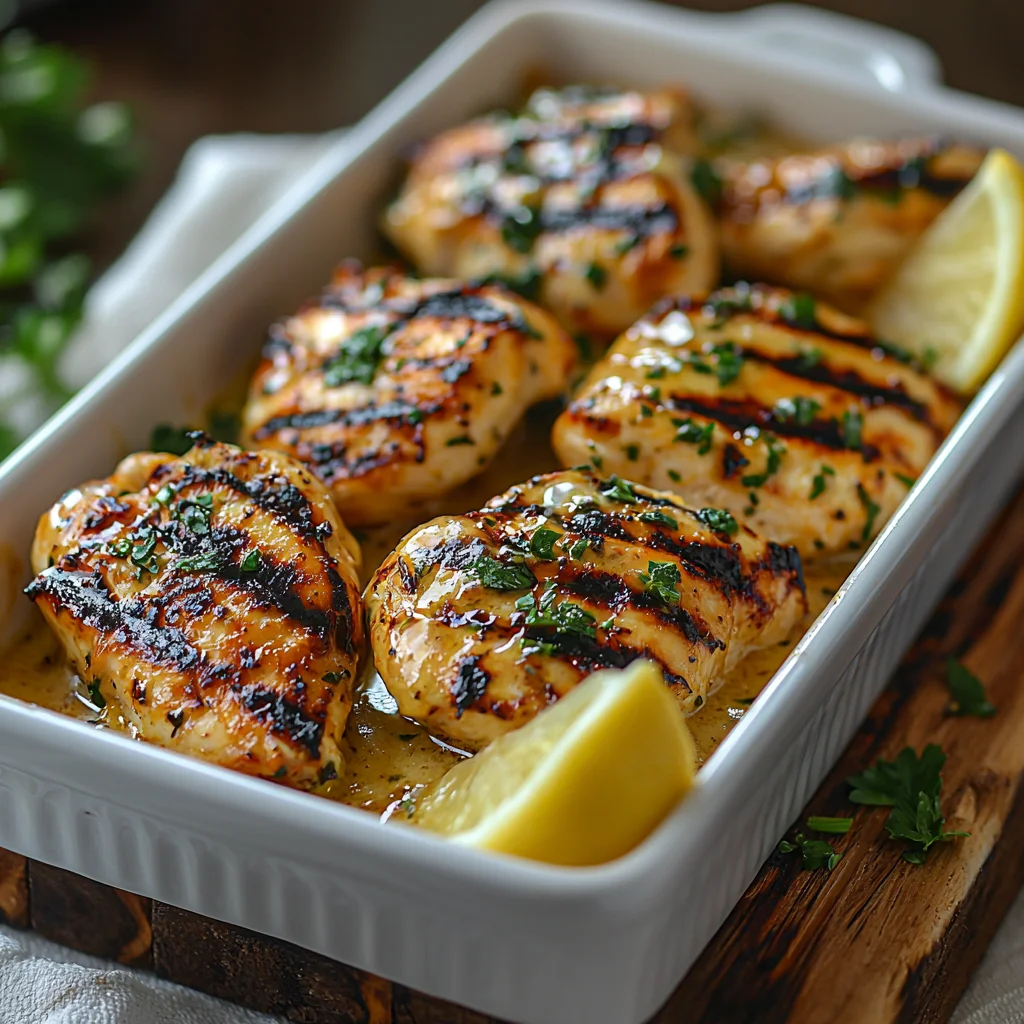
Grilled Lemon Herb Chicken
Ingredients
Method
- In a large bowl, whisk together olive oil, lemon juice, garlic, rosemary, thyme, salt, and pepper.
- Add the chicken breasts to the marinade, ensuring they are fully coated. Cover and refrigerate for at least 30 minutes (or up to 4 hours).
- Preheat your grill to medium-high heat (about 375°F).
- Remove the chicken from the marinade and let excess drip off. Discard the remaining marinade.
- Place the chicken on the grill and cook for 6-7 minutes per side, or until the internal temperature reaches 165°F.
- Transfer the chicken to a plate and let it rest for 5 minutes.
- Garnish with lemon slices and serve warm.


