

The smell of cinnamon and vanilla wafting through my kitchen always means one thing—it’s protein French toast casserole time. I first stumbled on this recipe when I needed a high-protein breakfast that could feed a crowd without keeping me chained to the stove. Now, it’s my go-to for lazy Sunday brunches or meal prep that actually tastes indulgent.
What makes this dish special? You get all the cozy, custardy goodness of classic French toast, but with a protein boost that keeps you full for hours. I’ve tweaked the recipe over the years to nail the perfect balance—crispy edges, a tender center, and just enough sweetness without feeling heavy. Plus, it’s forgiving: use whatever bread you’ve got, swap dairy as needed, and even sneak in extra nutrients like chia seeds or nut butter.
In this guide, I’ll walk you through my 5 easy steps to make foolproof protein French toast casserole every time. You’ll learn my tricks for avoiding soggy bread, the best protein powder to use (hint: it’s not just whey), and how to customize flavors for picky eaters. Whether you’re feeding a family or prepping weekday breakfasts, this dish is a game-changer—no fancy skills required. Let’s get started.
What Is Protein French Toast Casserole?
After years of experimenting with breakfast recipes, I’ve found that protein French toast casserole is the ultimate crowd-pleaser. It’s essentially a baked version of classic French toast, but with a high-protein twist that keeps you energized throughout the day. Instead of just eggs and milk, I add protein powder, Greek yogurt, or nut butter to boost the nutritional value. The result? A dish that’s creamy, indulgent, and packed with protein—perfect for anyone looking to start their day right.
What I love most about this casserole is how customizable it is. You can use any bread you have on hand, from sourdough to whole grain, and it still turns out delicious. Plus, it’s a fantastic way to meal prep. You can assemble it the night before, pop it in the fridge, and bake it fresh the next morning. It’s a lifesaver for busy weekdays or lazy weekend brunches.
Why Choose Protein French Toast Casserole?
I’ve always been a fan of high-protein breakfasts, and this casserole delivers in the best way. Starting your day with protein helps curb cravings and keeps you full longer, which is why I’ve made this recipe a staple in my kitchen. Plus, it’s so easy to make. You don’t need to stand over a skillet flipping slices of French toast—just mix, pour, and bake. It’s also a great way to use up stale bread, so nothing goes to waste. Trust me, once you try it, you’ll see why it’s become my go-to breakfast dish.
Why This Protein French Toast Casserole Recipe Works
This protein French toast casserole isn’t just delicious—it’s packed with balanced macronutrients to fuel your day. What makes it stand out is how simple it is to whip up. I’ve been making this recipe for years, and it’s never failed me. You only need a handful of basic ingredients like eggs, milk, bread, and protein powder (or Greek yogurt for extra creaminess). Plus, it’s customizable to dietary needs. Whether you’re gluten-free, dairy-free, or just looking to switch things up, this casserole adapts effortlessly.

Key Benefits of This Recipe
One of the best things about this casserole is how versatile it is. I’ve made it with sourdough, whole grain, and even gluten-free bread, and it always turns out perfectly. It’s also a meal prep dream. I love assembling it the night before and letting it soak overnight in the fridge. Then, I just pop it in the oven the next morning for a hassle-free breakfast. It’s perfect for busy weekdays or lazy weekend brunches when you want something hearty but easy.
Why Choose Protein French Toast Casserole?
I’m a huge fan of high-protein breakfasts, and this casserole delivers. Starting your day with protein helps curb cravings and keeps you full longer, which is why I’ve made it a staple in my kitchen. Plus, it’s so simple—no flipping slices of French toast in a skillet. Just mix, pour, and bake. It’s also a great way to use up stale bread, so nothing goes to waste. Trust me, once you try it, you’ll see why it’s become my go-to breakfast dish.
Ingredients for Protein French Toast Casserole
Since this casserole is such a meal prep dream, it’s important to gather the right ingredients to make it shine. I’ve experimented with different combinations over the years, and I’ve landed on a formula that’s both delicious and high protein. Whether you’re making it for a weekday breakfast or a weekend brunch, these ingredients come together to create a dish that’s hearty, satisfying, and easy to customize.

Essential Ingredients
The base of this casserole is simple but essential. You’ll need bread—I usually use whole grain or sourdough, but it’s flexible—and eggs, which are the star for adding protein. I also include milk (I prefer unsweetened almond milk, but any kind works), vanilla extract, and a touch of cinnamon for flavor. For sweetness, I add a bit of maple syrup or honey, depending on what I have on hand. Finally, a pinch of salt balances everything out. These ingredients create the perfect custard-like soak for the bread, making every bite soft and flavorful.
Optional Add-ins
One of my favorite things about this recipe is how adaptable it is. If I’m in the mood for extra protein, I’ll stir in a scoop of protein powder or sprinkle chia seeds into the mix. For a fruity twist, I’ll add blueberries or sliced bananas between the layers of bread. Nuts like walnuts or pecans add a nice crunch, and a handful of dark chocolate chips makes it feel indulgent. If I’m feeling fancy, I’ll top it with a drizzle of peanut butter or a dollop of Greek yogurt before serving. The possibilities are endless!
Step-by-Step Guide to Making Protein French Toast Casserole
With the ingredients ready and optional add-ins in mind, it’s time to bring this high-protein breakfast to life. I love making this casserole because it’s perfect for meal prep and can even be assembled the night before for an overnight option. Whether you’re serving a crowd or just want a hearty breakfast for the week, this recipe is a game-changer.
Preparation Steps
First, I slice the bread into cubes and arrange them evenly in a greased baking dish. In a mixing bowl, I whisk together the eggs, milk, vanilla extract, cinnamon, maple syrup, and salt until smooth. If I’m adding protein powder, I’ll blend it in now to avoid clumps. Then, I pour the custard mixture over the bread, making sure every piece is soaked. For extra texture, I’ll sprinkle optional add-ins like blueberries or nuts between the layers. Finally, I cover the dish with foil and let it sit for at least 30 minutes—or overnight—to allow the bread to absorb the custard.
Baking Instructions
When I’m ready to bake, I preheat the oven to 350°F (175°C). If I’ve refrigerated the casserole overnight, I let it sit on the counter for about 10 minutes to take the chill off. Then, I bake it covered with foil for 30 minutes to ensure the custard sets. After that, I remove the foil and bake for another 10-15 minutes until the top is golden and crisp. A quick test with a knife confirms it’s done when it comes out clean.
Serving Suggestions
Once it’s out of the oven, I let the casserole cool for a few minutes before slicing. For a finishing touch, I’ll drizzle it with extra maple syrup or a dollop of Greek yogurt. If I’m feeling indulgent, I’ll add a sprinkle of dark chocolate chips or a spoonful of peanut butter. This dish pairs beautifully with fresh fruit or a side of turkey bacon for an even higher-protein meal. It’s a breakfast that keeps me full and energized all morning!
Expert Tips for Perfect Protein French Toast Casserole
After letting the casserole soak overnight, I’ve learned a few tricks to make sure it turns out perfectly every time. The key is balancing texture and flavor while keeping it high-protein—no one wants a soggy breakfast! Here’s what I’ve picked up from years of tweaking this meal prep favorite.
Avoiding Common Mistakes
I used to end up with a mushy mess until I realized drier bread works best. Stale whole-grain or sourdough holds up better than fresh bread, which turns gluey. Also, don’t skimp on the protein powder—it thickens the custard. For extra flavor, I whisk in vanilla extract and cinnamon right into the egg mixture. Trust me, it makes all the difference! For more information, see FDA Food Safety.
Baking Instructions
I bake mine at 350°F (175°C) covered for 30 minutes, then uncovered until golden. If the top browns too fast, I tent it with foil. The casserole is done when a knife comes out clean—no jiggling in the center! Letting it rest for 5 minutes before slicing keeps those neat squares intact. For more information, see USDA Food & Nutrition.
Serving Suggestions
I love topping mine with Greek yogurt and berries for extra protein. For a cozy twist, I’ll warm up some almond butter and drizzle it over the top. Leftovers? They reheat beautifully—just pop a slice in the toaster oven! For more information, see Serious Eats.
Common Mistakes to Avoid
After years of tweaking this meal prep favorite, I’ve learned a few tricks to avoid common pitfalls. Over-soaking the bread is the biggest offender—it turns your casserole into a soggy disaster. I find that letting the bread soak for just 10-15 minutes is plenty. Also, using the wrong bread can ruin the texture. Fresh bread absorbs too much liquid, so I always opt for day-old whole-grain or sourdough.
How to Fix Common Issues
If your casserole comes out too wet, don’t panic—I’ve been there! First, try reducing the soaking time or using drier bread. Next, check your oven temperature. Baking at 350°F (175°C) is key—too hot, and the edges burn before the center sets. If the top browns too quickly, I tent it with foil. Finally, let the casserole rest for 5 minutes after baking—it helps the custard set and makes slicing easier.
Baking Instructions
I bake mine at 350°F (175°C) covered for 30 minutes, then uncovered until golden. If the top browns too fast, I tent it with foil. The casserole is done when a knife comes out clean—no jiggling in the center! Letting it rest for 5 minutes before slicing keeps those neat squares intact.
Serving Suggestions
I love topping mine with Greek yogurt and berries for extra protein. For a cozy twist, I’ll warm up some almond butter and drizzle it over the top. Leftovers? They reheat beautifully—just pop a slice in the toaster oven!
Variations and Substitutions
If you’re like me and love topping your Protein French Toast Casserole with Greek yogurt and berries, you’ll be happy to know this dish is super flexible. Whether you’re accommodating dietary needs or just craving a flavor twist, I’ve got you covered with easy swaps and creative ideas. Plus, these variations make it perfect for meal prep or an overnight breakfast—just assemble ahead and bake when you’re ready!
Dietary Substitutions
For a gluten-free version, I swap regular bread for gluten-free bread or even cubes of gluten-free waffles—they soak up the custard beautifully. If you’re dairy-free, almond milk or oat milk works just as well as regular milk, and you can use a dairy-free protein powder in the custard. I’ve even tried using coconut milk for a richer flavor, and it’s delicious! For a flavor twist, I sometimes add a teaspoon of cinnamon or a splash of vanilla extract to the custard for extra warmth and sweetness.
Flavor Variations
I love experimenting with flavors to keep this casserole exciting. For a tropical vibe, I mix in diced pineapple and coconut flakes before baking. If I’m craving something indulgent, I’ll toss in dark chocolate chips or swirl in some peanut butter. For a seasonal twist, pumpkin puree and pumpkin spice make it perfect for fall. Honestly, the possibilities are endless—just use what you have on hand and get creative!
Storage and Freezing Tips
Since this protein French toast casserole is perfect for meal prep, you’ll want to know how to store it properly. I often make a double batch because it reheats so well—just cover the baking dish tightly with foil or transfer leftovers to an airtight container. In the fridge, it stays fresh for 3-4 days, though mine never lasts that long! For longer storage, freezing is a game-changer, especially if you’re prepping for busy mornings.
Best Practices for Freezing
I’ve found the best way to freeze this casserole is to let it cool completely, then slice it into portions before wrapping each piece tightly in plastic wrap. You can also freeze the whole dish by covering it with foil and sliding it into a freezer bag. Either way, it’ll keep for up to 2 months. When I’m ready to eat, I pop a frozen slice straight into the toaster oven—no thawing needed!
Reheating Tips
For the crispiest results, I reheat leftovers in the oven at 350°F for 10-15 minutes. If I’m in a hurry, the microwave works too, though it softens the texture a bit. Adding a quick drizzle of syrup or a dollop of Greek yogurt makes it feel fresh-baked all over again. Trust me, this high-protein breakfast tastes just as good on day three as it did straight out of the oven!
Frequently Asked Questions
How do I make protein French toast casserole ahead?
I love prepping this dish the night before because it saves so much time in the morning. First, assemble the casserole as usual—layer the bread, pour the protein-packed custard over it, and sprinkle any toppings. Then, cover it tightly with plastic wrap or foil and refrigerate overnight. In the morning, just pop it in the oven straight from the fridge. The flavors meld beautifully, and it’s ready to bake in minutes!
What protein powder works best in French toast casserole?
I’ve experimented with a few types, and vanilla or unflavored whey protein powder works best for me. It blends smoothly into the custard without overpowering the dish. If you’re plant-based, try a pea or rice protein powder—just make sure it’s not too chalky. I recommend avoiding chocolate or strongly flavored powders unless you want a dessert-like casserole. Always mix it well to avoid clumps for the perfect texture.
Can I use almond milk in protein French toast casserole?
Absolutely! Almond milk is my go-to dairy-free option for this recipe. It’s lighter than regular milk but still gives the custard a creamy texture. Just make sure it’s unsweetened to avoid making the casserole too sweet. I’ve also used oat milk and coconut milk, and both work great. If you’re using almond milk, you might want to add a splash of cream or extra egg for richness.
Why is protein French toast casserole healthier than regular?
This version is healthier because it’s packed with extra protein from the powder and eggs, which keeps you fuller longer. I also use whole-grain bread for added fiber and skip sugary syrups, opting for fresh fruit or a drizzle of honey instead. Plus, you can control the sweetness and fat by choosing low-fat milk or dairy-free alternatives. It’s a balanced breakfast that feels indulgent but fuels your day the right way.
Why Trust Me?
I’ve been making Protein French Toast Casserole every weekend for the past two years, tweaking the recipe until it’s just right. One time, I accidentally used too much protein powder, and the texture turned out dry—lesson learned! Now, I’ve nailed the perfect ratio of eggs, milk, and powder for a fluffy, protein-packed dish. My husband even calls it his “weekend fuel,” and it’s become a family favorite.
Final Thoughts
This Protein French Toast Casserole has become a weekend staple in my kitchen, and I hope it finds a place in yours too. It’s packed with high-protein goodness, making it a guilt-free way to indulge in something sweet and satisfying. Plus, the make-ahead convenience means you can prep it the night before and wake up to a delicious breakfast without any hassle.

What I love most about this recipe is how versatile it is—whether you’re feeding a crowd or just treating yourself, it always hits the spot. It’s also a great way to use up stale bread, so nothing goes to waste.
Give this recipe a try and let me know how it turns out! Did you add your own twist with toppings or mix-ins? I’d love to hear your ideas—what’s your favorite way to enjoy French toast?
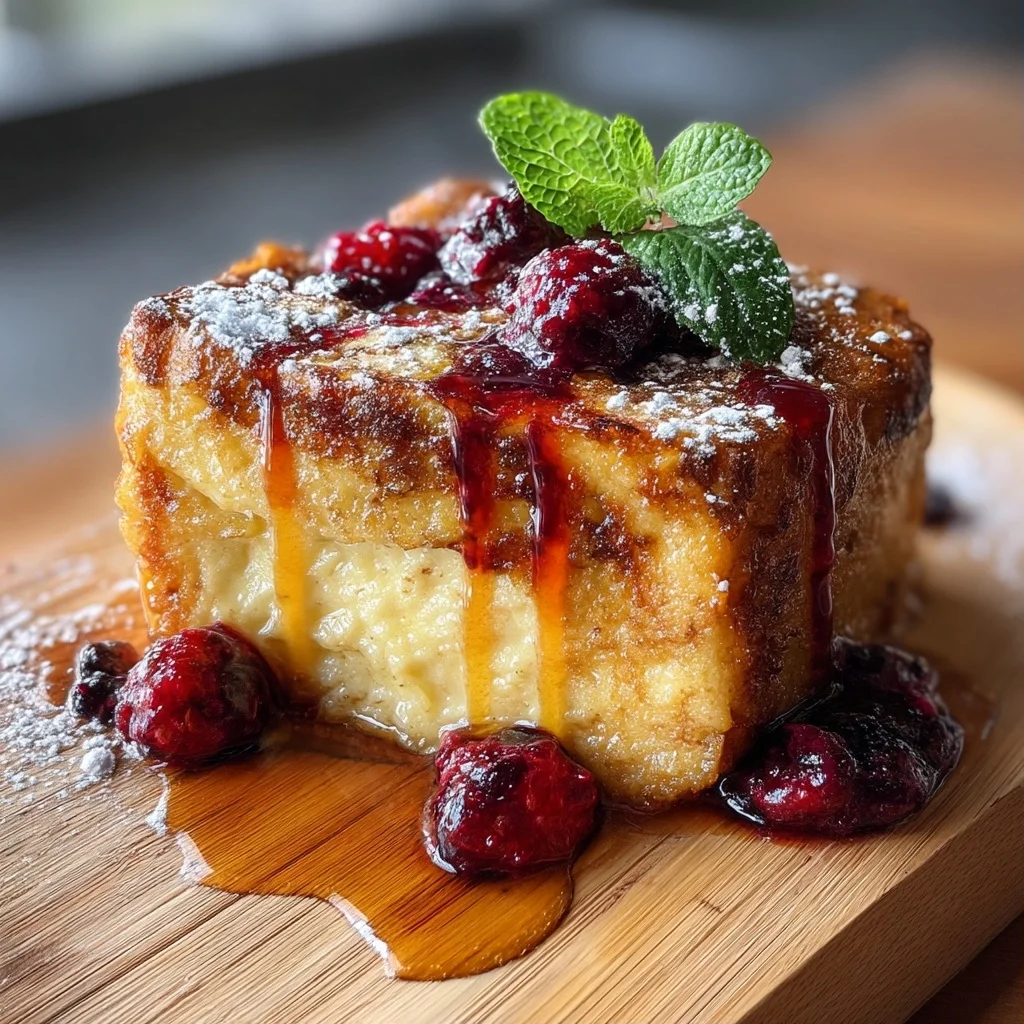
PROTEIN FRENCH TOAST CASSEROLE
Ingredients
Method
- Preheat oven to 350°F (175°C) and grease a 9×13 inch baking dish.
- Cut the bread into 1-inch cubes and spread evenly in the prepared baking dish.
- In a large mixing bowl, whisk together eggs, almond milk, protein powder, maple syrup, vanilla extract, cinnamon, and nutmeg until smooth.
- Pour the egg mixture evenly over the bread cubes, pressing down gently to ensure all bread is soaked.
- Sprinkle blueberries and chopped walnuts evenly over the top.
- Bake in the preheated oven for 35 minutes, or until the top is golden brown and the center is set.
- Let cool for 5 minutes before serving.


