

The moment you stir that first spoonful of creamy pesto pasta, the vibrant green sauce clinging to every strand, you’ll understand why this dish has been my go-to for busy weeknights and impromptu dinner parties alike. I first fell in love with it when my neighbor brought over a bowl after a long workday—one bite of that rich, herbaceous sauce with just the right amount of creaminess, and I was hooked.
In this guide, I’ll walk you through my foolproof method for making creamy pesto pasta that’s luxuriously smooth without being heavy. You’ll learn how to balance the bold flavors of fresh basil pesto with just enough cream to create a velvety texture, plus my secret for keeping the sauce from separating (hint: it’s all about temperature control). I’ve also included tips for choosing the best pasta shape to hold the sauce and how to adjust the consistency if it gets too thick.
Whether you’re cooking for one or feeding a crowd, this recipe comes together in under 30 minutes. By the end, you’ll have a dish that feels indulgent but is surprisingly simple—the kind of meal you’ll want to make again and again.
What Makes Creamy Pesto Pasta So Irresistible
That first bite of my neighbor’s pesto pasta taught me why this dish is magic—it’s the way the bright basil and garlic mingle with rich cream, clinging to every noodle. Creamy pesto pasta isn’t just another sauce; it’s a harmony of textures and flavors that feels fancy but takes less effort than ordering takeout. I’ve made it for picky kids, gluten-free friends (just swap the pasta), and even my mother-in-law who “doesn’t like green food”—everyone licks their plate clean.

The Perfect Balance of Creamy and Herby
Getting the pesto-to-cream ratio right is key. Too much cream drowns the basil’s freshness, but too little leaves the sauce thin. I start with a generous scoop of homemade or high-quality store-bought pesto, then whisk in heavy cream until it turns the color of pale sea glass. The trick? Warm the cream slightly first—cold cream can make the sauce seize up. For a lighter version, I’ll sometimes use whole milk or even coconut milk, but nothing beats the silkiness of real dairy.
What seals the deal is the pasta water. I reserve a cup of the starchy liquid, adding it tablespoon by tablespoon until the sauce coats the back of a spoon. This little step transforms the dish from “good” to “can I have seconds?” territory. And if you’re adding protein like chicken or shrimp, toss it in right at the end—the residual heat warms it through without overcooking. Trust me, once you master this balance, you’ll crave it weekly.
Essential Ingredients for Creamy Pesto Pasta
That silky, herb-packed sauce we just talked about? It all starts with the right ingredients. I’ve made this dish dozens of ways, and the difference between “meh” and “wow” often comes down to three things: the pasta shape, the pesto quality, and your cream choice. Let’s break it down so you can nail this every time.

Choosing the Right Pasta Shape
Not all pastas are created equal when it comes to creamy sauces. I swear by fettuccine or tagliatelle—their wide, flat ribbons cradle the sauce like a cozy blanket. Penne or rigatoni work too, with their ridges trapping pockets of pesto cream. But avoid spaghetti or angel hair; they’re too delicate and the sauce just slides right off. One time I tried using orzo, and while it tasted great, the texture felt more like risotto (which isn’t necessarily a bad thing if you’re into that!). For a quick weeknight version, I’ll even use rotini—the spirals hold up surprisingly well.
Pesto: Homemade or Store-Bought?
Here’s the truth: homemade pesto is unbeatable, but a busy schedule doesn’t always allow for it. When I’ve got time, I blend fresh basil, pine nuts, garlic, and parmesan with a glug of good olive oil. But Trader Joe’s or Rao’s jarred pesto? Totally acceptable in a pinch—just taste it first. Some brands are too salty or oily. For a creamy pesto pasta with chicken, I’ll amp up store-bought pesto with an extra handful of grated parm and a squeeze of lemon. Dairy-wise, heavy cream is my go-to for richness, but for a creamy pesto pasta with milk, whole milk + a pat of butter works. Vegan? Coconut milk adds a subtle sweetness that oddly complements the basil. Just don’t skip the pasta water—it’s the magic glue that brings it all together.
Step-by-Step Creamy Pesto Pasta Recipe
Whether you’re using homemade pesto or a trusty jar from the store, the key to nailing this dish lies in the techniques. I’ve made this recipe countless times, and I’ve learned a few tricks along the way to make it foolproof. Let’s dive into the process, starting with the pasta base and finishing with that luscious creamy pesto sauce.
Preparing the Pasta Base
First, always cook your pasta in well-salted boiling water. I use about 1 tablespoon of salt for every 4 quarts of water—it might seem like a lot, but it’s essential for flavor. I prefer penne or farfalle for creamy pesto pasta because their shapes hold onto the sauce beautifully. If you’re making a creamy pesto pasta with chicken, rotini works wonders too—its spirals trap bits of chicken and sauce perfectly. Cook the pasta until it’s al dente, which usually takes about 8-10 minutes. Don’t overcook it, or you’ll end up with mushy noodles that won’t stand up to the sauce.
Here’s my golden rule: reserve at least 1 cup of pasta water before draining. This starchy liquid is the secret to creating a silky, cohesive sauce. I’ve skipped this step before, and trust me, the sauce just doesn’t come together the same way. Once drained, toss the pasta with a drizzle of olive oil to prevent sticking while you prepare the sauce.
Creating the Creamy Pesto Sauce
Now, let’s make the star of the show—the creamy pesto sauce. In a large skillet, I heat a splash of olive oil over medium heat. If you’re adding chicken, now’s the time to sauté it until golden. Next, I pour in about 1/2 cup of heavy cream—it’s my go-to for richness, but if you’re making a creamy pesto pasta with milk, use whole milk and a tablespoon of butter for extra silkiness. Let the cream simmer gently for a minute or two, then stir in 1/2 cup of pesto.
Here’s where the magic happens: add 1/4 cup of reserved pasta water and stir until the sauce becomes glossy and smooth. If it’s too thick, add more pasta water a tablespoon at a time. I always finish with a handful of grated Parmesan and a squeeze of lemon juice for brightness. Finally, toss the cooked pasta in the sauce, coating every strand evenly. Serve immediately with an extra sprinkle of Parmesan and a few basil leaves for garnish. This simple creamy pesto pasta recipe is ready in under 30 minutes, making it perfect for busy weeknights!
Expert Tips for Perfect Creamy Pesto Pasta
That glossy, velvety sauce coating your pasta doesn’t happen by accident—it’s all about technique. I’ve made this simple creamy pesto pasta recipe dozens of times, and through trial and error, I’ve nailed down the tricks to keep it smooth, flavorful, and quick. Whether you’re adding chicken or keeping it vegetarian, these pro tips will take your dish from good to restaurant-worthy.
How to Prevent Sauce Separation
Nothing’s worse than a broken, oily sauce. The key is temperature control. I always warm my cream gently over medium-low heat—never let it boil, or it’ll curdle. When adding pesto, take the pan off the heat for a minute to avoid shocking the basil (which turns dark and bitter). Stirring in reserved pasta water is non-negotiable; the starch acts like glue, binding the cream and pesto into a silky emulsion. If I’m making creamy pesto pasta with milk, I’ll whisk in a teaspoon of cornstarch first to stabilize it. Last pro move: toss the pasta in the sauce right before serving. Letting it sit too long can cause separation.
Flavor Enhancement Methods
Pesto alone packs a punch, but I’ve found a few extras make it sing. A splash of lemon juice brightens the richness, while a pinch of red pepper flakes adds subtle heat. For creamy pesto pasta with chicken, I’ll deglaze the pan with white wine after sautéing—those browned bits add depth. Freshly grated Parmesan melts smoother than pre-shredded, and a handful of toasted pine nuts on top gives crunch. My secret? A dab of mascarpone stirred in at the end for extra lushness.
Time-Saving Preparation
Weeknight dinners shouldn’t be fussy. I prep my pesto ahead (it freezes beautifully) and use store-bought in a pinch. Cooking pasta al dente is faster, and it’ll finish in the sauce anyway. For protein, I’ll grab rotisserie chicken or toss in frozen shrimp straight to the pan—they thaw while cooking. One skillet does all the work, and cleanup’s a breeze. This dish proves gourmet doesn’t have to mean complicated.
Delicious Variations of Creamy Pesto Pasta
That dab of mascarpone I mentioned earlier? It’s just one way to make this dish your own. Over the years, I’ve played with dozens of creamy pesto pasta variations depending on what’s in my fridge or who’s coming to dinner. The beauty of this recipe is how easily it adapts—whether you need extra protein, want to go meatless, or just crave seasonal flavors. For more information, see Serious Eats Italian.
Creamy Pesto Pasta with Chicken
My go-to weeknight upgrade is adding juicy chicken. I’ll pan-sear boneless thighs (they stay moister than breasts) with garlic until golden, then slice them into ribbons to toss with the pasta. Leftover rotisserie chicken works wonders too—just stir in shredded pieces during the last minute of cooking to warm through. For a lighter version, I sometimes use half-and-half instead of heavy cream, or even swap in creamy pesto pasta with milk when I’m out of dairy. A handful of sun-dried tomatoes or roasted red peppers adds pops of color and sweetness. For more information, see Bon Appétit Italian.
Vegetarian and Vegan Twists
When my vegetarian friends visit, I skip the chicken and load up on veggies. Sautéed mushrooms and spinach melt right into the sauce, while roasted zucchini or eggplant makes it heartier. For a vegan take, I blend cashews with the pesto for creaminess and use nutritional yeast instead of Parmesan. Last summer, I tossed in charred corn and cherry tomatoes straight from the garden—the sweetness balanced the pesto’s garlicky kick perfectly. For more information, see Best Italian Recipes.
Seasonal Swaps
This dish shines with whatever’s fresh. In fall, I’ll roast butternut squash cubes and stir them in with crispy sage. Winter calls for caramelized onions and wilted kale, while spring begs for asparagus and peas. The simple creamy pesto pasta recipe stays the same at its core, but these little changes keep it exciting all year round.
Nutritional Information and Dietary Considerations
After experimenting with all those seasonal twists and vegan versions of my creamy pesto pasta, I realized how flexible this dish can be for different dietary needs. A standard serving with full-fat cream and Parmesan clocks in around 650 calories, but you can easily lighten it up without sacrificing that luxurious texture.
Making It Lighter Without Losing Creaminess
I’ve found that swapping heavy cream for half-and-half or even whole milk cuts nearly 200 calories per serving—my creamy pesto pasta with milk trick still gives that velvety sauce, just with less guilt. For diabetic-friendly adjustments, I’ll use whole wheat pasta and bump up the protein with grilled shrimp or chicken (hello, creamy pesto pasta with chicken). If acid reflux is a concern, I skip the garlic in the pesto and add a pinch of lemon zest instead—it keeps the flavor bright without the heartburn trigger. A handful of blanched almonds blended into the sauce adds thickness without dairy, which my lactose-intolerant cousin swears by.
Vegetarian and Vegan Twists
When my vegetarian friends visit, I skip the chicken and load up on veggies. Sautéed mushrooms and spinach melt right into the sauce, while roasted zucchini or eggplant makes it heartier. For a vegan take, I blend cashews with the pesto for creaminess and use nutritional yeast instead of Parmesan. Last summer, I tossed in charred corn and cherry tomatoes straight from the garden—the sweetness balanced the pesto’s garlicky kick perfectly.
Seasonal Swaps
This dish shines with whatever’s fresh. In fall, I’ll roast butternut squash cubes and stir them in with crispy sage. Winter calls for caramelized onions and wilted kale, while spring begs for asparagus and peas. The simple creamy pesto pasta recipe stays the same at its core, but these little changes keep it exciting all year round.
Storing and Reheating Creamy Pesto Pasta
After experimenting with all those seasonal twists and dairy-free versions, you’ll want to keep leftovers tasting fresh. I’ve learned the hard way that creamy pesto pasta can turn grainy or separate if stored wrong—especially versions with milk or chicken. Here’s how I keep mine silky, whether it’s a simple creamy pesto pasta recipe or a loaded veggie version.
How to Freeze Without Losing Texture
Freezing works best with the sauce alone, not the noodles. I ladle extra pesto cream sauce into ice cube trays, freeze until solid, then transfer to bags. When I’m ready to use it, I thaw a few cubes overnight, warm them gently with a splash of milk or broth, and toss with freshly cooked pasta. The one time I froze the whole dish, the noodles turned mushy—lesson learned! For creamy pesto pasta with chicken, I freeze the cooked chicken separately to avoid dryness.
Reviving Leftovers
The microwave is your enemy here. I reheat portions in a skillet with a drizzle of olive oil or water, stirring constantly. If the sauce looks broken, a quick whisk with a teaspoon of hot water brings it back. My kids swear leftover creamy pesto pasta with milk tastes even better the next day—the flavors meld while chilling. Just don’t leave it out more than two hours; that dairy can turn risky fast.
Frequently Asked Questions
What to put in pesto pasta to make it creamy?
I love making my pesto pasta extra creamy by adding a few simple ingredients. My go-to is mixing in heavy cream or half-and-half while heating the pesto sauce—about ¼ cup per serving. You can also stir in cream cheese or mascarpone for a richer texture. If you want a lighter option, blend the pesto with Greek yogurt or a splash of pasta water and grated Parmesan to thicken it naturally. It’s all about balancing flavors while keeping it silky.
Is pesto ok for diabetics?
As someone who’s mindful of blood sugar, I can say pesto can be diabetic-friendly if you watch portions. Traditional pesto is low-carb since it’s mostly basil, nuts, olive oil, and cheese—no added sugars. But, store-bought versions sometimes sneak in extra oils or fillers, so I always check labels. Pair it with whole-grain pasta or zucchini noodles to slow digestion. Just stick to a 2-tablespoon serving to keep fats in check without spiking glucose.
What is creamy pesto sauce made of?
My favorite creamy pesto sauce starts with the classic basil, garlic, pine nuts, Parmesan, and olive oil blend, but I boost it with heavy cream or cashew cream for richness. Some recipes use avocado for a dairy-free option, while others mix in butter or cream cheese. I’ve even seen versions with white beans blended in for protein. The key is keeping the pesto’s bright herb flavor while adding just enough creaminess to coat the pasta perfectly.
Is pesto ok if you have acid reflux?
If you deal with acid reflux like I do, pesto can be tricky but not off-limits. The garlic and olive oil might trigger symptoms for some, but you can tweak the recipe. I skip raw garlic and use roasted garlic instead, which is gentler. Also, go easy on the cheese—opt for low-fat Parmesan or leave it out. Pairing pesto with whole-wheat pasta and lean proteins helps balance the meal without worsening reflux.
Why Trust Me?
I’ve been perfecting my creamy pesto pasta recipe for over 5 years, making it weekly for family dinners and potlucks. One time, I added too much cream and ended up with a soup—lesson learned! Now, I balance the cream with a touch of pasta water for the silkiest texture. My sister still calls it her favorite dish, and she’s picky about pesto!
Final Thoughts
This creamy pesto pasta has been my go-to comfort food for years—it’s quick enough for busy weeknights but feels special enough to serve guests. The velvety sauce clings to every noodle, and the fresh basil adds that bright, herby punch I crave. Plus, it’s endlessly adaptable: toss in grilled chicken, sun-dried tomatoes, or extra Parmesan if you’re feeling fancy.

I first learned this recipe from my Italian neighbor, who swore by blending the pesto with cream for maximum richness. Now, it’s the dish my friends request most often—and I bet it’ll become a staple in your kitchen too.
Give it a try this week and let me know how it turns out! Did you stick with the classic version or add your own twist? And if you’re a pesto lover like me, what’s your favorite way to use it? Drop a comment below—I’d love to hear from you!
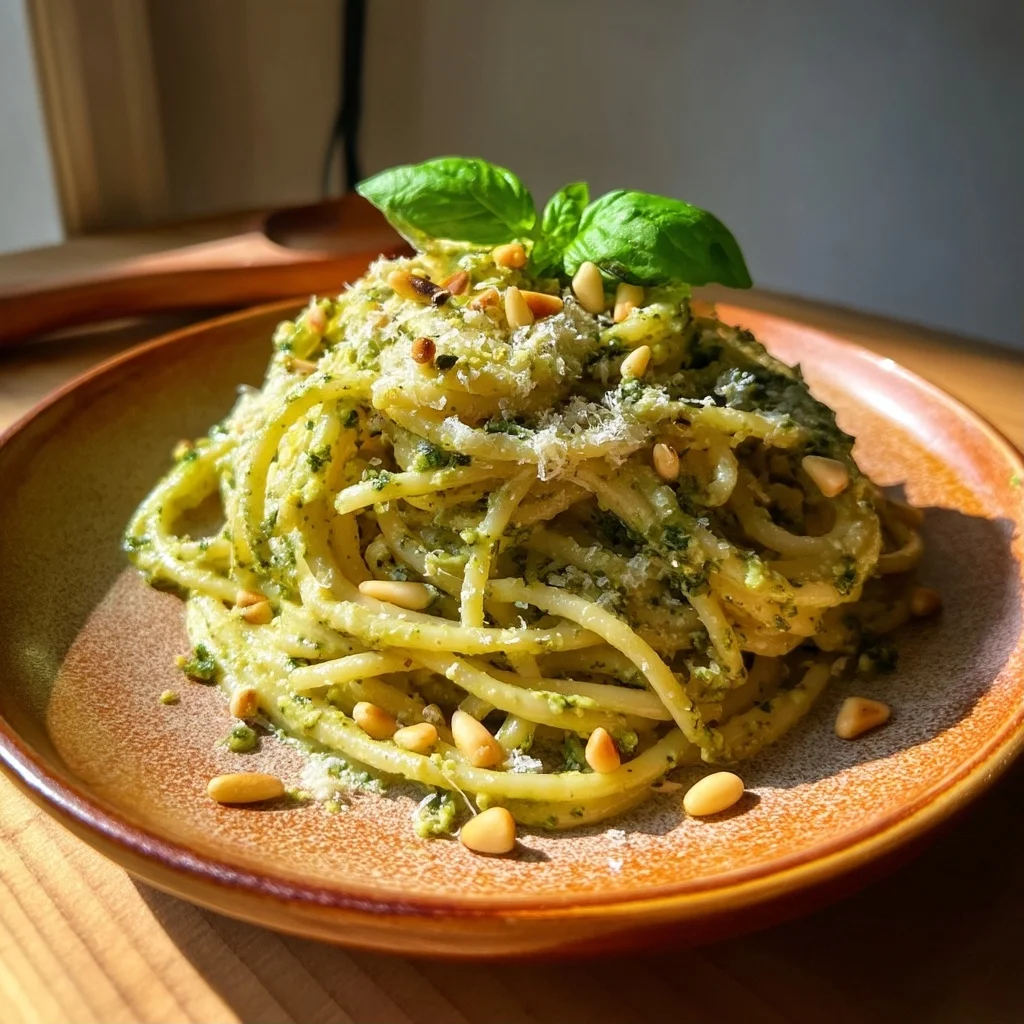
Creamy Pesto Pasta
Ingredients
Method
- Cook pasta in salted boiling water according to package directions until al dente. Reserve 1/4 cup pasta water before draining.
- While pasta cooks, make pesto: Blend basil, pine nuts, garlic, and olive oil in a food processor until smooth.
- Heat heavy cream in a large skillet over medium-low heat until just simmering.
- Whisk in pesto mixture, Parmesan, salt, and pepper until fully combined.
- Add drained pasta to the skillet, tossing to coat evenly. Add reserved pasta water 1 tbsp at a time if needed to loosen sauce.
- Stir in lemon juice for brightness.
- Garnish with extra Parmesan, pine nuts, and cherry tomatoes before serving.


