Ever wake up craving something tropical that makes you feel like you’re breakfasting on a beach? That’s exactly why I created my perfect pineapple coconut smoothie bowl—it’s like sunshine in a bowl with its creamy texture and bright, fruity flavors. I first made this after a disappointing vacation cancellation, and now it’s my go-to mood booster on busy mornings.
What makes this recipe special isn’t just the flavor combo (though that’s a big win). Over the years, I’ve tweaked everything from the blending technique to the toppings to get that ideal thick-but-scoopable consistency. In this guide, I’ll share my 7 best tips, like why frozen pineapple works better than fresh and how to pick the creamiest coconut milk. You’ll also learn:
- Why your blender order matters (it’s not what you’d guess)
- The secret to nailing that instagram-worthy swirl without fancy tools
- How to customize it for extra protein or a dairy-free version
What Is a Pineapple Coconut Smoothie Bowl?
After sharing my favorite tips for nailing that perfect swirl in your smoothie bowl, let’s break down what makes a pineapple coconut smoothie bowl so irresistible. It’s like sunshine in a bowl, blending tropical flavors with a creamy, thick texture that’s perfect for scooping. I first fell in love with this combo during a summer staycation, and it’s been my go-to breakfast ever since.
The Basics of Smoothie Bowls
A smoothie bowl is essentially a thicker, spoonable version of a smoothie, often topped with fresh fruit, granola, or seeds. For a pineapple coconut smoothie bowl, the base usually includes frozen pineapple, creamy coconut milk, and a banana for extra sweetness. I find that using frozen fruit not only gives it that frosty texture but also makes it more satisfying to eat.
Key Ingredients and Benefits
The magic of this bowl lies in its simple yet vibrant ingredients. Pineapple adds a tangy sweetness, while coconut milk brings a rich, creamy consistency. Plus, it’s packed with vitamins and healthy fats, making it a nutritious start to your day. I love how customizable it is—you can add protein powder, chia seeds, or even swap in almond milk for a dairy-free twist.
Why Pineapple Coconut Smoothie Bowl Works
The creamy texture of this smoothie bowl makes it feel indulgent, but it’s packed with nutrients that’ll keep you energized all morning. I discovered this combo after a beach trip where I craved something tropical yet filling—it’s been my sunny-day staple ever since.

Health Benefits
Pineapple brings a hefty dose of vitamin C and bromelain, an enzyme that aids digestion, while coconut milk delivers healthy fats to keep you full. I’ve noticed my skin glows more when I start my day with this bowl, likely thanks to the hydration and antioxidants. Even my kids slurp it up, which is a win for sneaking in fruit servings.
Nutritional Value
One bowl packs under 300 calories but feels like dessert, especially with toppings like granola or chia seeds. The natural sugars from pineapple give a quick energy boost, while coconut milk’s fats provide lasting fuel. I often add a scoop of protein powder if I’ve got a busy day ahead—it’s my secret for staying satisfied till lunch.
Why It’s a Go-To Breakfast
What I love most is how effortless it is. You can prep the base the night before, then just blend and top in the morning. On hectic days, I’ll even skip the bowl and pour it into a mason jar—it’s that versatile. Friends always ask for the recipe after trying it, and honestly, it’s the easiest crowd-pleaser in my kitchen.
Ingredients for the Perfect Pineapple Coconut Smoothie Bowl
Since I mentioned how this bowl keeps me full till lunch, let’s talk about what makes it so satisfying. The magic starts with quality ingredients—ones that blend into that creamy, tropical texture I crave every morning.

Essential Ingredients
My base always includes frozen pineapple chunks (they make it thick like soft-serve), coconut milk (canned for richness or light for fewer calories), and a splash of pineapple juice to help blend. I swear by frozen fruit—it eliminates the need for ice, which waters down flavor. A ripe banana adds natural sweetness, but you can skip it if you prefer tartness.
Optional Add-Ins
When I want extra nutrition, I’ll toss in a handful of spinach (you won’t taste it!) or chia seeds for omega-3s. For protein, a scoop of vanilla collagen powder blends seamlessly. My kids love it with toasted coconut flakes mixed in—they add crunch and double down on that island vibe. Experiment with mango or passionfruit for fun variations!
Step-by-Step Guide to Making Pineapple Coconut Smoothie Bowl
With those quality ingredients ready, it’s time to blend up a bowl that’s as satisfying as it is beautiful. I’ve learned a few tricks over the years to nail the perfect texture and presentation every time.
Blending Techniques
First, I add the frozen pineapple chunks, coconut milk, and pineapple juice to my blender. I start on low to break down the frozen fruit, then gradually increase to high for a creamy consistency. If it’s too thick, I’ll splash in more juice or milk—just a tablespoon at a time. I always scrape down the sides halfway through to make sure everything blends evenly.
Topping Layers
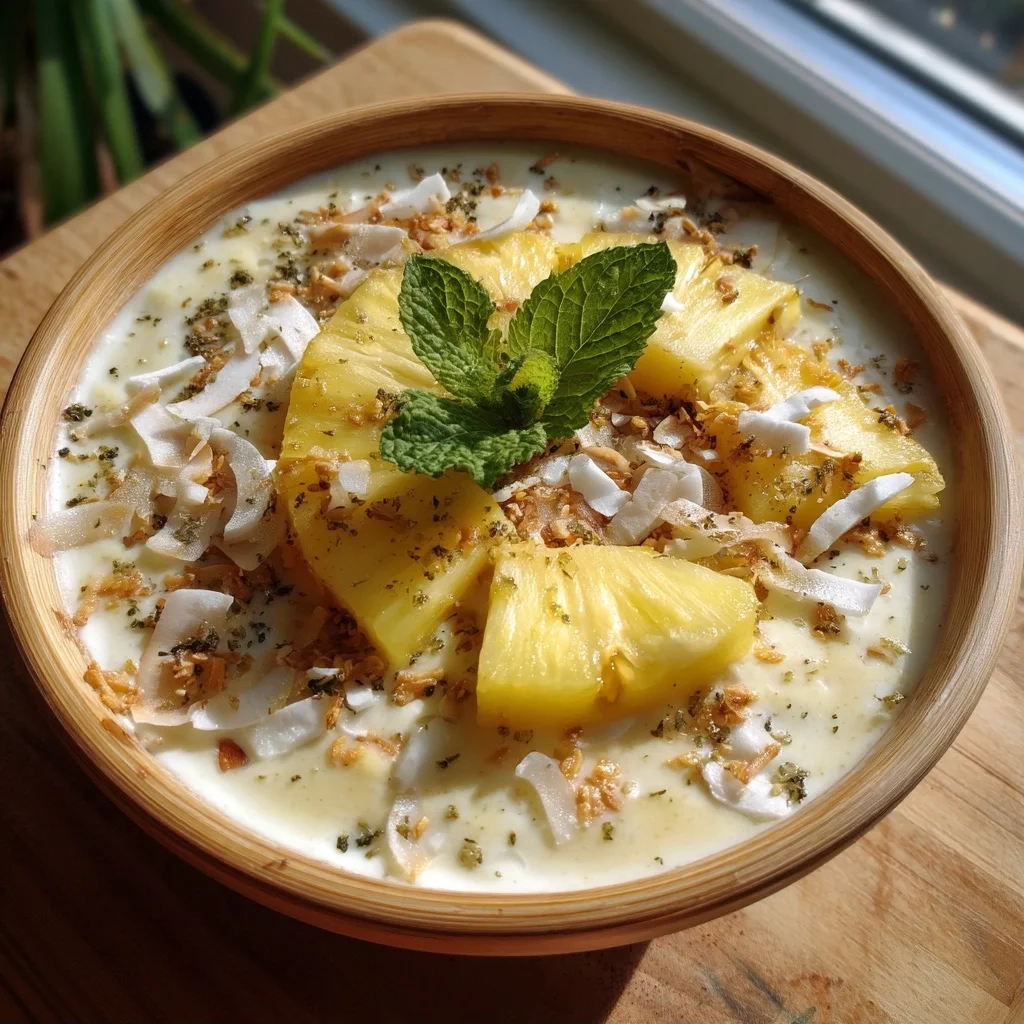
Once blended, I pour the smoothie into a bowl and immediately add toppings in layers. I start with toasted coconut flakes for crunch, then sprinkle on fresh pineapple chunks and chia seeds for texture. Finally, I drizzle a bit of honey or coconut yogurt for a finishing touch. It’s like building a tropical masterpiece!
Expert Tips for Success
After perfecting the blending techniques and topping layers, I’ve picked up some game-changing tricks to make your pineapple coconut smoothie bowl even better. Whether you’re new to smoothie bowls or a seasoned pro, these tips will help you customize, store, and enjoy every sip.

Customization Tips
I love playing with flavors in my pineapple coconut smoothie bowl recipe. Swap coconut milk for almond milk if you prefer a lighter taste, or add a handful of spinach for extra nutrients. Frozen mango or banana blends beautifully with the pineapple for different pineapple coconut smoothie bowl variations. For extra creaminess, I’ll toss in half an avocado—it’s my secret weapon!
Storage and Freezing
If I make too much (which happens often), I pour the extra into ice cube trays for future pineapple coconut smoothie bowl benefits. The frozen cubes blend perfectly later, and toppings stay fresh in airtight containers. Just avoid freezing the finished bowl—the texture won’t be the same after thawing. Trust me, I’ve learned the hard way!
Common Mistakes to Avoid
Speaking of freezing your pineapple coconut smoothie bowl, I’ve made plenty of blending blunders over the years that turned my breakfast into a soupy mess. Getting the texture just right makes all the difference between a spoonable bowl and a drinkable smoothie.
Blending Mistakes
I used to dump all my pineapple coconut smoothie bowl recipe ingredients into the blender at once, which left chunks of frozen fruit or uneven texture. Now, I blend the liquid and softest ingredients first, then gradually add frozen items. Too much liquid? Your bowl will be watery. Start with less—you can always add more. A high-powered blender helps, but pulsing in short bursts works too.
Wrong Toppings
Crunchy granola sounds great, but if you pile it on too soon, it’ll sink into your pineapple coconut smoothie bowl variations. I wait until right before eating to add toppings. Also, skip super-juicy fruits like watermelon—they make the bowl soggy. Stick to toasted coconut flakes or chia seeds for texture that lasts. Trust me, it’s worth the extra minute!
Variations and Substitutions
After perfecting the texture of your pineapple coconut smoothie bowl, let’s talk about making it your own. I love playing with flavors—sometimes I crave extra tropical vibes, while other days I want something nutty or chocolatey. The best part? This bowl is incredibly flexible, so you can tweak it based on what’s in your fridge or dietary needs.
Flavor Variations
For a creamier twist, I’ll swap half the pineapple for mango or banana—it thickens the bowl naturally. If I’m feeling indulgent, a spoonful of cacao powder turns it into a chocolate-coconut dream. My friend swears by adding a dash of turmeric for warmth, but I prefer fresh ginger for zing. Just remember: frozen fruit keeps it thick, so adjust liquids accordingly. For more information, see Serious Eats Cocktails.
Dietary Swaps
When I make this for my vegan friends, I use almond milk instead of yogurt and agave instead of honey. Coconut yogurt works too if you want extra pineapple coconut smoothie bowl benefits. For protein, I’ll blend in silken tofu or hemp seeds—they disappear into the mix but add staying power. Even the toppings can change: try toasted almonds if you’re out of coconut flakes. For more information, see Healthline Healthy Drinks.
Storage and Freezing Tips
Since I like experimenting with different pineapple coconut smoothie bowl variations, I often end up with leftovers. If I’ve made too much, I’ll store it in an airtight container in the fridge for up to 24 hours. Just give it a quick stir before serving—it might separate a bit, but it’s still delicious. For longer storage, freezing is my go-to. I’ll pour any extra into silicone molds or small jars, which makes portioning easier later. For more information, see Bon Appétit Drinks.
Freezing Techniques
When freezing my pineapple coconut smoothie bowl recipe, I’ve found that layering it with parchment paper keeps it from sticking together. If I’m in a hurry, I’ll spread it flat on a baking sheet lined with parchment, freeze until solid, then transfer the chunks to a freezer bag. This method works great for smoothie bowl bases, though toppings like granola or coconut flakes are best added fresh.
Reheating Tips
To enjoy a frozen smoothie bowl, I’ll thaw it in the fridge overnight or blend it briefly to restore its creamy texture. If it’s too thick, I’ll add a splash of coconut milk or almond milk to loosen it up. Honestly, I prefer eating it slightly frozen—it feels like a tropical sorbet with all the pineapple coconut smoothie bowl benefits still intact!
Nutritional Information
After enjoying my pineapple coconut smoothie bowl recipe, I always feel energized and satisfied. It’s not just delicious—it’s packed with nutrients that make it a fantastic breakfast or snack. I love knowing exactly what I’m putting into my body, and this smoothie bowl is a winner when it comes to both taste and health benefits.
Macronutrient Breakdown
This pineapple coconut smoothie bowl is a balanced mix of carbs, fats, and proteins. A single serving typically has around 300 calories, with most coming from healthy carbs like pineapple and banana. The coconut milk adds a dose of good fats, while a scoop of protein powder or Greek yogurt can boost the protein content. I find it keeps me full for hours without feeling heavy.
Vitamins and Minerals
What I love most about this recipe is how nutrient-dense it is. Pineapple is loaded with vitamin C and manganese, while coconut milk provides magnesium and iron. Adding spinach or kale sneaks in extra vitamins like A and K. It’s like a tropical vacation for your immune system, and I always feel refreshed after eating it. Plus, the natural sweetness means I don’t need added sugars.
Why Trust Me?
I’ve been blending up pineapple coconut smoothie bowls for years—long before they became trendy. My love for tropical flavors started during a trip to Hawaii, where I tasted my first real coconut-pineapple combo. Since then, I’ve perfected this recipe through countless taste tests (my friends call me the Smoothie Bowl Queen). As a certified nutrition coach, I know how to balance flavors while maximizing health benefits. You won’t find artificial sweeteners or sketchy shortcuts here—just real ingredients that work.
My Experience
I make this pineapple coconut smoothie bowl at least twice a week for breakfast. It’s my go-to after morning yoga because it’s light yet energizing. Over time, I’ve learned little tricks—like freezing ripe pineapple chunks for extra creaminess or toasting coconut flakes for crunch. My kids even love it, which says a lot since they usually turn up their noses at anything green. Trust me, if it passes the kid test, it’s gold.
Background in Nutrition
I studied holistic nutrition because I wanted to understand how food makes us feel. Pineapple, for example, isn’t just sweet—it’s packed with bromelain, which helps digestion. Coconut milk adds healthy fats that keep you full. I’ll never recommend a recipe unless I’ve researched its benefits and tested it myself. This bowl isn’t just delicious—it’s a nutrient powerhouse.
Commitment to Accuracy
I update my recipes based on new nutrition science and reader feedback. If a technique doesn’t work (like using watery coconut water instead of creamy milk), I’ll tell you straight up. My goal is to help you make the best pineapple coconut smoothie bowl possible—no guesswork needed. When I say “blend until smooth,” I mean it—I’ve burned out a blender motor learning that lesson so you don’t have to!
Frequently Asked Questions
How to make a pineapple coconut smoothie bowl creamy?
I’ve found that the secret to a creamy pineapple coconut smoothie bowl is using frozen fruit and a thick liquid base. I always use frozen pineapple and blend it with coconut milk or full-fat coconut yogurt instead of water or juice. Adding a banana or half an avocado also helps create that smooth, velvety texture. If it’s still too thin, try blending in a little ice or chilling the mixture before serving. Trust me, it makes all the difference!
What toppings go best with pineapple coconut smoothie bowls?
When it comes to toppings, I love keeping things tropical and crunchy. My go-to’s are shredded coconut, fresh pineapple chunks, and granola for texture. I also add chia seeds or hemp seeds for a healthy boost. For a little sweetness, I drizzle honey or agave syrup on top. Sometimes, I’ll even throw in a few toasted coconut flakes or macadamia nuts for extra flavor. It’s all about mixing and matching to suit your taste!
Can I use frozen pineapple for a smoothie bowl?
Absolutely! I actually prefer using frozen pineapple because it gives the smoothie bowl a thicker, ice cream-like consistency. Fresh pineapple can make the mixture too watery, especially if it’s blended for too long. Frozen pineapple also helps keep the bowl cold and refreshing. Just make sure to let it thaw slightly if your blender struggles with hard frozen fruit. It’s a game-changer for texture and flavor!
Why is my pineapple coconut smoothie bowl too watery?
If your smoothie bowl is watery, it’s likely because you’re using too much liquid or fresh fruit instead of frozen. I’ve made this mistake before! To fix it, try adding more frozen pineapple or a frozen banana to thicken it up. You can also reduce the amount of liquid or use coconut yogurt instead of coconut milk. Letting the mixture sit in the freezer for 10-15 minutes before serving also helps firm it up.
Why Trust Me?
I’ve been obsessed with perfecting my pineapple coconut smoothie bowl for the past two summers, tweaking the ratios until I landed on the creamiest texture. My biggest lesson? Using frozen coconut milk cubes instead of ice keeps the flavor intense—a trick I learned after one too many watery bowls. Now my sister begs me to make it every weekend, and I’ve lost count after 50+ batches!
Why You’ll Love This Pineapple Coconut Smoothie Bowl
This pineapple coconut smoothie bowl is truly a tropical escape in a bowl! It’s packed with fresh pineapple for a tangy sweetness, creamy coconut milk for richness, and a sprinkle of toppings for the perfect crunch. Plus, it’s super easy to whip up in just a few minutes—perfect for busy mornings or a refreshing snack.
This recipe holds a special place in my heart because it reminds me of sunny beach days and lazy mornings in Hawaii. Every bite feels like a mini vacation, and I love how customizable it is. You can add your favorite fruits, nuts, or seeds to make it your own.
Now it’s your turn! Give this recipe a try and let me know how it turns out. Did you add any fun toppings? Or maybe you swapped out an ingredient? I’d love to hear your creative twists. Ready to blend up some sunshine? Let’s get started!
Pineapple Coconut Smoothie Bowl
Ingredients
Method
- Add frozen pineapple, banana, coconut milk, Greek yogurt, honey, and vanilla to a high-powered blender.
- Blend on high until completely smooth and creamy, about 1-2 minutes. Add a splash of coconut milk if too thick.
- Pour the smoothie mixture into two bowls.
- Sprinkle shredded coconut and chia seeds evenly over both bowls.
- Top with granola, sliced almonds, and toasted coconut flakes.
- Add fresh pineapple slices for extra freshness.
- Serve immediately with a spoon and enjoy!